Introduction
How Long Does a Lithium Battery Last? In most energy storage applications, a high-quality lithium battery can last several years to more than a decade, depending on chemistry, cycle life, temperature, depth of discharge, charging habits, and Battery Management System design. For LiFePO4 batteries used in solar storage, home backup, RV, marine, and portable power applications, lifespan is often one of the main reasons buyers choose lithium over older battery technologies.
The short answer is: lithium battery lifespan is measured in both years and cycles. A battery may be designed for thousands of charge-discharge cycles, but real-world service life depends on how deeply it is discharged, how hot it gets, how it is charged, and how well the system protects the cells.
This guide explains lithium battery lifespan in beginner-friendly language for B2B buyers, solar energy users, RV and marine owners, portable power station buyers, and energy storage distributors. For basic lithium battery education, see [What Is a Lithium Battery]?.
_______________________________________________________________________
What Determines the Lifespan of a Lithium Battery?
Lithium battery lifespan is determined by chemistry, cell quality, pack design, operating temperature, charging profile, depth of discharge, and usage pattern. The same battery can last much longer in a well-designed solar storage system than in a hot, high-current, poorly managed application.
The most important lifespan factors include:
Factor |
Why It Matters |
Battery chemistry |
LiFePO4, NMC, and other chemistries age differently |
Cycle life rating |
Shows expected charge-discharge cycles under test conditions |
Depth of discharge |
Deeper discharge usually increases stress |
Temperature |
Heat accelerates aging; cold affects charging and capacity |
Charging habits |
Overcharging, wrong voltage, or poor chargers reduce life |
BMS quality |
Protects cells from unsafe voltage, current, and temperature |
Application |
Solar, RV, marine, home backup, and portable use have different duty cycles |
A manufacturer datasheet is always the best source for model-specific lifespan expectations. However, understanding the general rules helps buyers compare batteries more intelligently.
_______________________________________________________________________
Understanding Battery Cycle Life
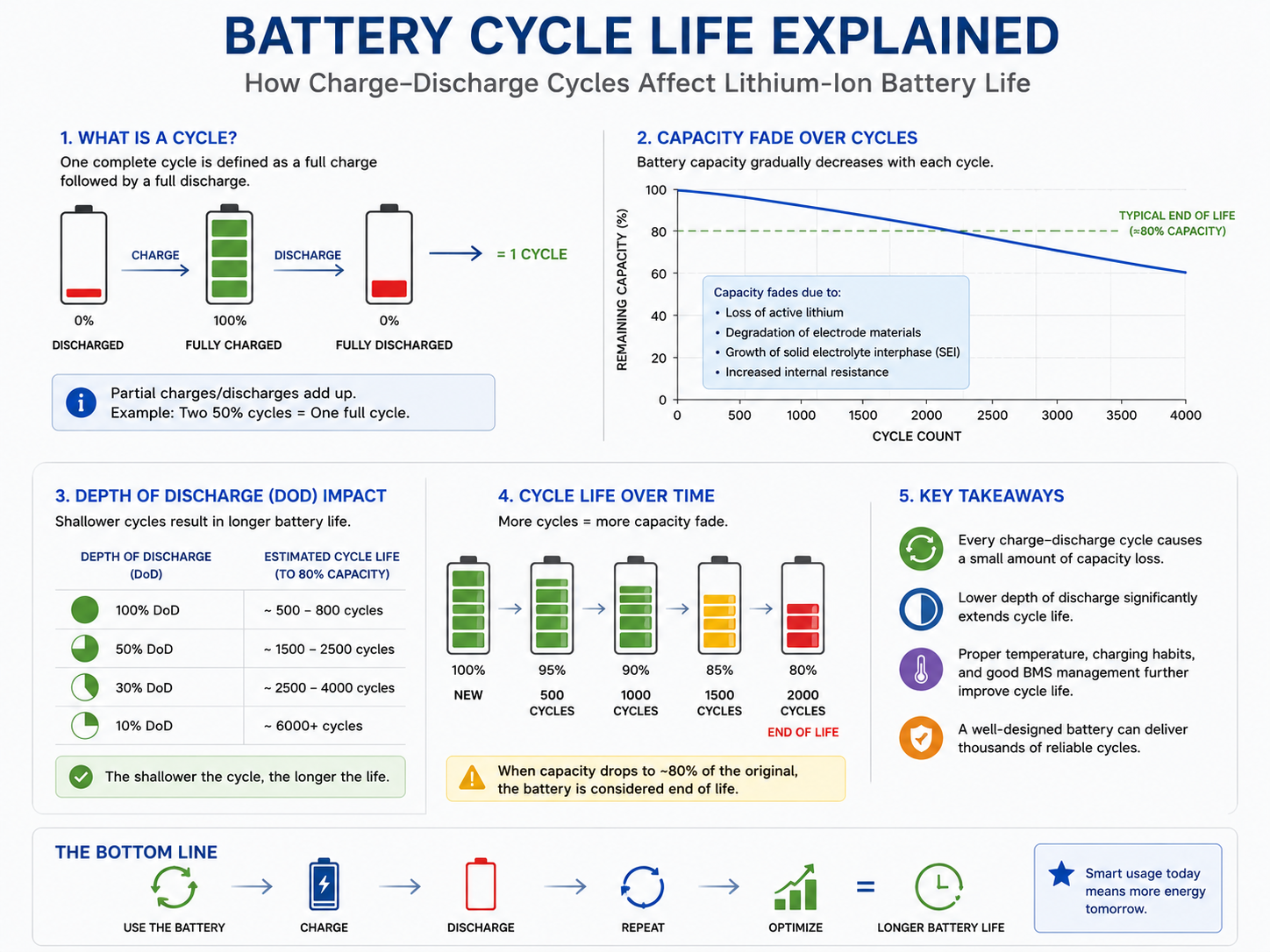
Battery cycle life means how many charge-discharge cycles a battery can complete before its usable capacity drops to a defined level, often around 70% or 80% of original capacity depending on the test standard and manufacturer.
One cycle does not always mean one full drain from 100% to 0%. If you use 50% of the battery today and 50% tomorrow, that can roughly equal one full cycle. This is why Battery Cycle Life matters more than calendar age in daily-use energy storage.
For example:
Use Pattern |
Cycle Impact |
Daily solar cycling |
High cycle count over years |
Emergency backup only |
Low cycle count, calendar aging more important |
RV weekend use |
Moderate cycle count |
Portable power station used monthly |
Low to moderate cycle count |
A lithium battery with high cycle life is especially valuable where it charges and discharges frequently, such as solar energy storage, telecom backup, and home energy storage systems.
_______________________________________________________________________
How Many Years Does a Lithium Battery Typically Last?
How Long Does a Lithium Battery Last in years? In many real-world energy storage applications, lithium batteries may last about 5-15 years depending on chemistry, usage, and environment. LiFePO4 batteries often sit at the longer-life end of the range when properly designed and maintained.
A practical estimate:
Application |
Typical Lifespan Trend |
Portable electronics |
Often several years depending on use |
Portable power stations |
Often 5-10+ years depending on cycles and chemistry |
LiFePO4 solar batteries |
Often 8-15 years in well-managed systems |
Home energy storage systems |
Often 8-15 years depending on design and cycling |
RV and marine LiFePO4 batteries |
Often many years with correct charging and storage |
These are general ranges, not guarantees. Battery health depends on real operating conditions. A battery exposed to high heat, deep discharge, or improper charging may age much faster than one operated within recommended limits.
_______________________________________________________________________
LiFePO4 vs Other Lithium Battery Chemistries: Lifespan Comparison
LiFePO4 batteries are widely used in energy storage because they offer strong cycle life, safety, and thermal stability. Other lithium chemistries, such as NMC, may offer higher energy density, which is useful where compact size and weight are top priorities.
Chemistry |
Common Strength |
Lifespan Trend |
Typical Applications |
LiFePO4 / LFP |
Long cycle life and stability |
Usually strong |
Solar, home backup, RV, marine, ESS |
NMC |
Higher energy density |
Varies by design and use |
EVs, compact battery packs, power tools |
LCO |
High energy density |
Usually less ideal for heavy cycling |
Consumer electronics |
LTO |
Very long cycle life and fast charge |
Strong but higher cost |
Specialized industrial systems |
For chemistry education, see [What Is LiFePO4 Battery?], [Types of Lithium Batteries Explained], [Difference Between Lithium-Ion and LiFePO4], and [LiFePO4 vs NMC Battery].
Longer lifespan is one reason lithium batteries have become popular in modern energy storage, but it is not the only reason. Buyers also value higher usable capacity, lower maintenance, faster charging, and better integration with solar inverters and smart monitoring systems. For a broader market and application overview, see [Why Are Lithium Batteries So Popular?].
_______________________________________________________________________
Factors That Affect Lithium Battery Lifespan
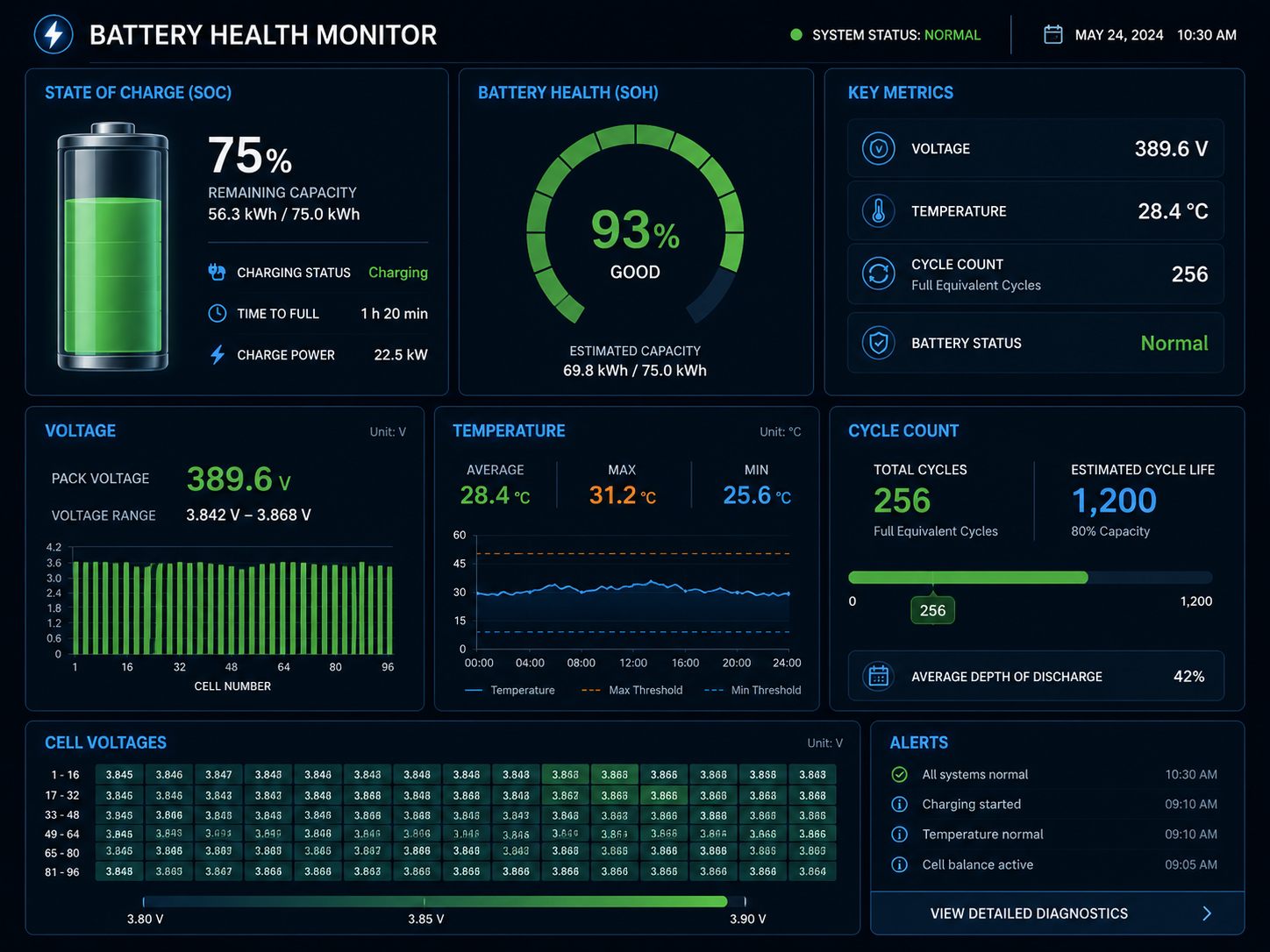
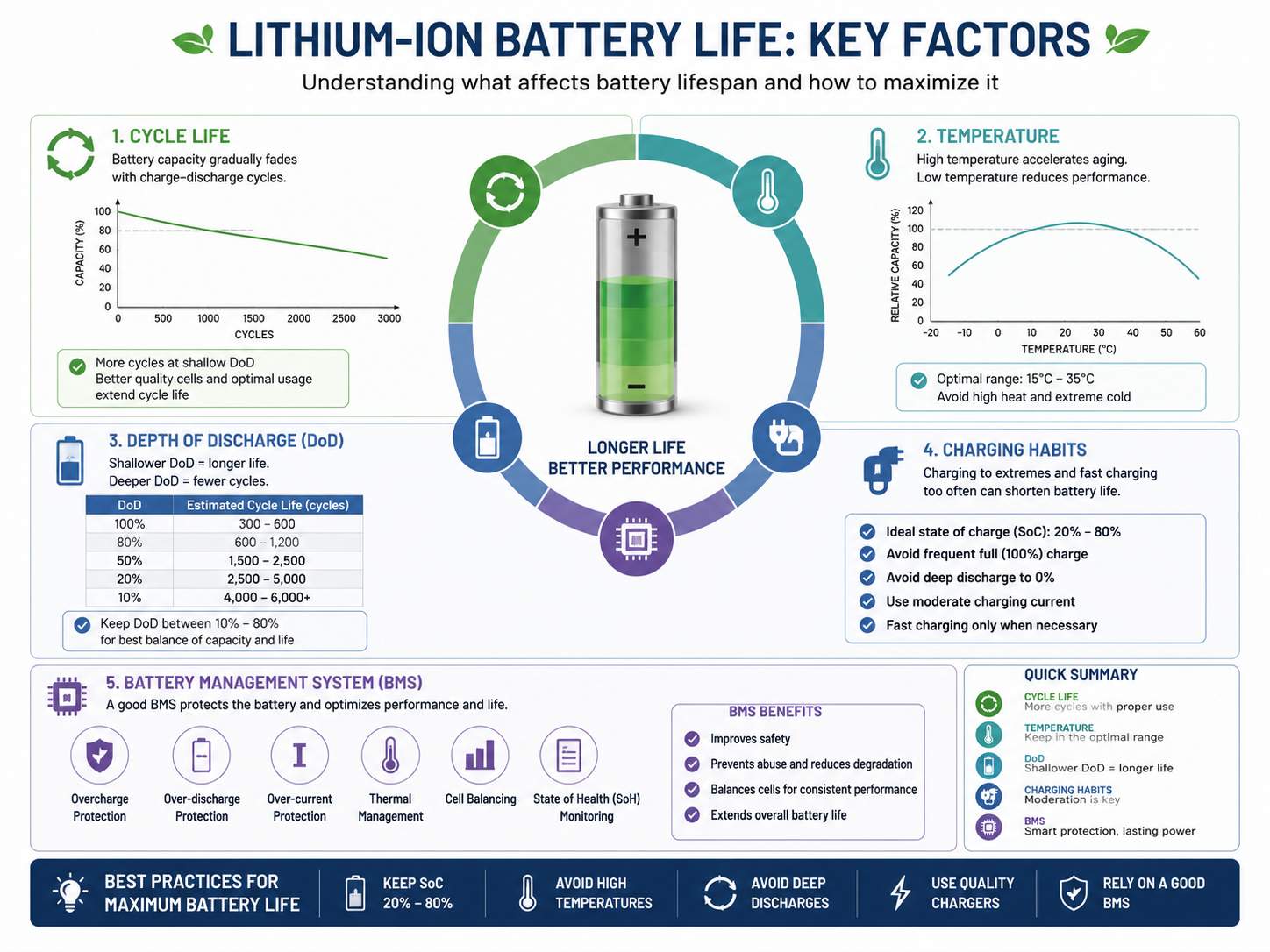
Lithium batteries age through a combination of cycle aging and calendar aging. Cycle aging comes from charge and discharge activity. Calendar aging happens over time even when the battery is not used.
Charging habits
Use chargers and inverters designed for the correct lithium chemistry. Incorrect voltage settings, poor-quality chargers, or frequent overcharging can reduce battery life. For LiFePO4 battery maintenance, correct charge voltage and BMS compatibility are essential.
Depth of discharge (DoD)
Depth of discharge means how much of the battery capacity is used before recharge. A 100Ah battery discharged by 80Ah has an 80% DoD. Lithium batteries generally tolerate deeper discharge better than lead-acid batteries, but repeated extreme discharge can still reduce lifespan.
Temperature
Heat is one of the biggest enemies of lithium battery lifespan. High temperatures accelerate chemical aging. Cold temperatures reduce available capacity and can make charging unsafe if the battery does not include low-temperature charging protection.
Storage conditions
For long-term storage, avoid storing lithium batteries fully depleted. Many manufacturers recommend storing batteries at a partial state of charge in a cool, dry place, then checking them periodically.
Battery Management System (BMS)
A good BMS monitors cell voltage, current, temperature, state of charge, and protection limits. It helps prevent overcharge, over-discharge, short circuit, and unsafe temperature operation. To understand the basic working principle, see [How Does a Lithium Battery Work?].
_______________________________________________________________________
How to Extend the Life of a Lithium Battery
The best way to extend lithium battery life is to reduce unnecessary stress while keeping the battery within its recommended operating range.
Practical maintenance tips:
Use the correct lithium-compatible charger.
Avoid frequent full discharge when not necessary.
Keep the battery away from extreme heat.
Do not charge below the manufacturer's low-temperature limit.
Store at partial charge for long idle periods.6. Keep terminals clean and connections tight.
Avoid overloading the battery beyond rated current.
Follow firmware or monitoring guidance for smart systems.
Check battery health data if the system provides monitoring.
Follow the manufacturer's maintenance instructions.
For buyers comparing lithium with older technologies, [LiFePO4 vs Lead Acid Battery] explains why lithium often delivers longer lifecycle value in deep-cycle applications.
[Soft CTA 1] Looking for long-life energy storage? Explore LiFePO4 battery products designed for solar storage, RV power, marine systems, home backup, and commercial energy applications.
_______________________________________________________________________
Common Signs That a Lithium Battery Needs Replacement
A lithium battery usually does not fail all at once. It often shows declining performance before replacement becomes necessary.
Common replacement signs include:
Sign |
What It May Indicate |
Noticeably shorter runtime |
Capacity has faded |
Battery reaches low voltage quickly |
Internal aging or imbalance |
Charging finishes unusually fast |
Reduced usable capacity |
BMS trips frequently |
Overcurrent, imbalance, temperature, or cell issue |
Swelling, odor, leakage, or heat |
Stop using and inspect immediately |
Error codes from inverter or BMS |
System fault or battery health issue |
Cannot support normal load |
Internal resistance may have increased |
For safety-related questions, see [Are Lithium Batteries Safe?]. If a battery shows physical damage, abnormal heat, swelling, or smell, stop using it and consult the manufacturer or a qualified technician.
_______________________________________________________________________
Lithium Battery Lifespan for Different Applications
Lithium battery lifespan changes by application because the duty cycle changes.
Solar energy storage
Solar batteries may cycle daily, so cycle life, DoD, efficiency, and temperature control are critical. LiFePO4 is commonly preferred because it handles frequent cycling well. See [Best Lithium Battery for Solar Storage] .
Home backup systems
Home backup batteries may cycle less frequently if used only during outages, or more often if used for solar self-consumption and time-of-use optimization. Battery sizing should focus on essential loads, inverter compatibility, and expected discharge frequency. See [Home Energy Storage Battery Guide] .
Portable power stations
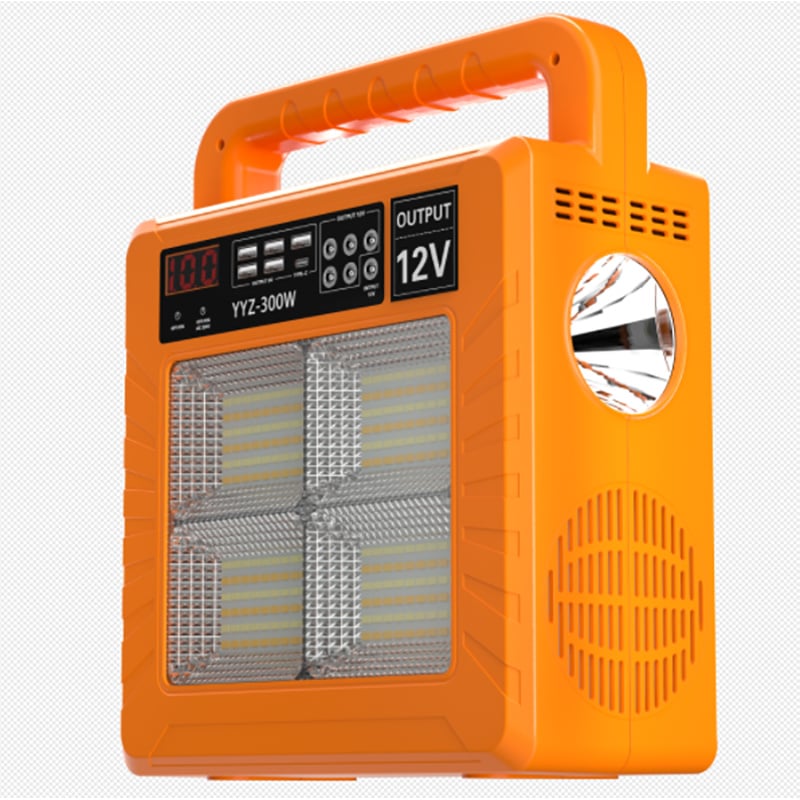
Portable power stations need compact size, reliable BMS protection, and good cycle life. Lifespan depends on how often the unit is discharged, whether it is stored properly, and whether it is exposed to heat in vehicles or outdoor environments. See [Portable Power Station].
RV and marine use
RV and marine batteries experience vibration, variable temperature, alternator charging, shore power, and solar charging. Proper charger settings and secure installation are essential. LiFePO4 is popular because it reduces weight and provides high usable capacity.
Application |
Main Lifespan Risk |
Best Practice |
Solar storage |
Daily cycling and heat |
Use LiFePO4, proper inverter settings, ventilation |
Home backup |
Oversized loads or poor sizing |
Back up essential circuits first |
Portable power station |
Heat and deep discharge |
Store cool and partially charged |
RV/marine |
Charging mismatch and vibration |
Use compatible chargers and secure mounting |
[Soft CTA 2] Planning solar or home backup storage? Explore solar energy storage batteries and home energy storage systems designed for long cycle life, stable performance, and reliable backup power.
_______________________________________________________________________
Frequently Asked Questions
How long does a lithium battery last on average?
A lithium battery may last several years to more than a decade depending on chemistry, cycle life, temperature, depth of discharge, and charging habits. LiFePO4 batteries used in energy storage often have a longer lifespan than many other lithium chemistries.
What is lithium battery cycle life?
Lithium battery cycle life is the number of charge-discharge cycles a battery can complete before its capacity drops to a defined level, often around 70% or 80% of original capacity depending on the manufacturer standard.
How many years does a LiFePO4 battery last?
A LiFePO4 battery can often last 8-15 years in well-designed energy storage systems, depending on cycle frequency, temperature, DoD, charger settings, and BMS quality.
How can I extend lithium battery life?
Use the correct charger, avoid excessive heat, reduce unnecessary deep discharge, store the battery at partial charge, keep connections clean, avoid overloading, and follow manufacturer instructions.
When should I replace a lithium battery?
Replace a lithium battery when runtime becomes too short for the application, the BMS reports repeated faults, the battery cannot support normal loads, or there are safety signs such as swelling, abnormal heat, odor, or physical damage.
_______________________________________________________________________
Conclusion
So, How Long Does a Lithium Battery Last? The answer depends on chemistry, cycle life, temperature, charging habits, depth of discharge, storage conditions, and BMS quality. In energy storage applications, a well-designed lithium battery can often serve for many years, while LiFePO4 batteries are especially valued for long cycle life and stable performance.
For B2B buyers, solar owners, RV and marine users, and home backup customers, the best battery is not simply the one with the highest capacity label. It is the battery that delivers reliable usable energy over the full lifecycle. With correct sizing, proper charging, good temperature management, and basic maintenance, lithium batteries can provide dependable long-term power for solar storage, home energy systems, portable power stations, and off-grid applications.
[Soft CTA 3] Ready to select a long-life battery system? Compare LiFePO4 battery products, solar energy storage batteries, home energy storage systems, and portable power station battery solutions for your application.
 Hot News
2026-08-20
2026-08-16
2026-08-12
2026-08-03
2026-07-30
2026-07-26

Pittar Power is a professional manufacturer specializing inenergy storage solutions.
Room 302, Building 1, No. 10, Huangjin First Road, Nancheng District, Dongguan City, Guangdong Province, China
Copyright © Shenzhen Pittar Power Co., Ltd. All Rights Reserved Privacy Policy
 EN
EN