How Does a Lithium Battery Work is one of the most important questions for anyone evaluating modern energy storage. Whether you are comparing solar batteries, sourcing portable power station packs, designing a home backup system, or researching industrial battery platforms, understanding the basic working principle helps you make better technical and commercial decisions.
A lithium battery stores electrical energy as chemical energy and releases it when power is needed. The process depends on controlled movement of lithium ions between two electrodes, supported by carefully engineered materials, a separator, electrolyte, and a battery management system. This article explains How Lithium Batteries Work in clear, beginner-friendlylanguage while supporting the broader pillar guide [What Is a Lithium Battery?].
_____________________________________________________________________
A lithium battery is a rechargeable battery that uses lithium-based chemistry to store and release energy. In most modern rechargeable applications, the term refers to lithium-ion batteries, where lithium ions move between the positive electrode and negative electrode during charging and discharging.
Lithium batteries are used in solar energy storage systems, electric vehicles, portable power stations, home backup batteries, RV systems, power tools, telecom backup systems, and industrial energy storage equipment. Their popularity comes from high energy density, strong efficiency, long cycle life, and relatively low maintenance compared with older battery technologies.
For buyers, the term “lithium battery” can refer to many chemistries, including LiFePO4, NMC, LCO, and others. Each chemistry has different strengths in safety, power output, cost, cycle life, and energy density.
_____________________________________________________________________
How Does a Lithium Battery Work? Basic Working Principle
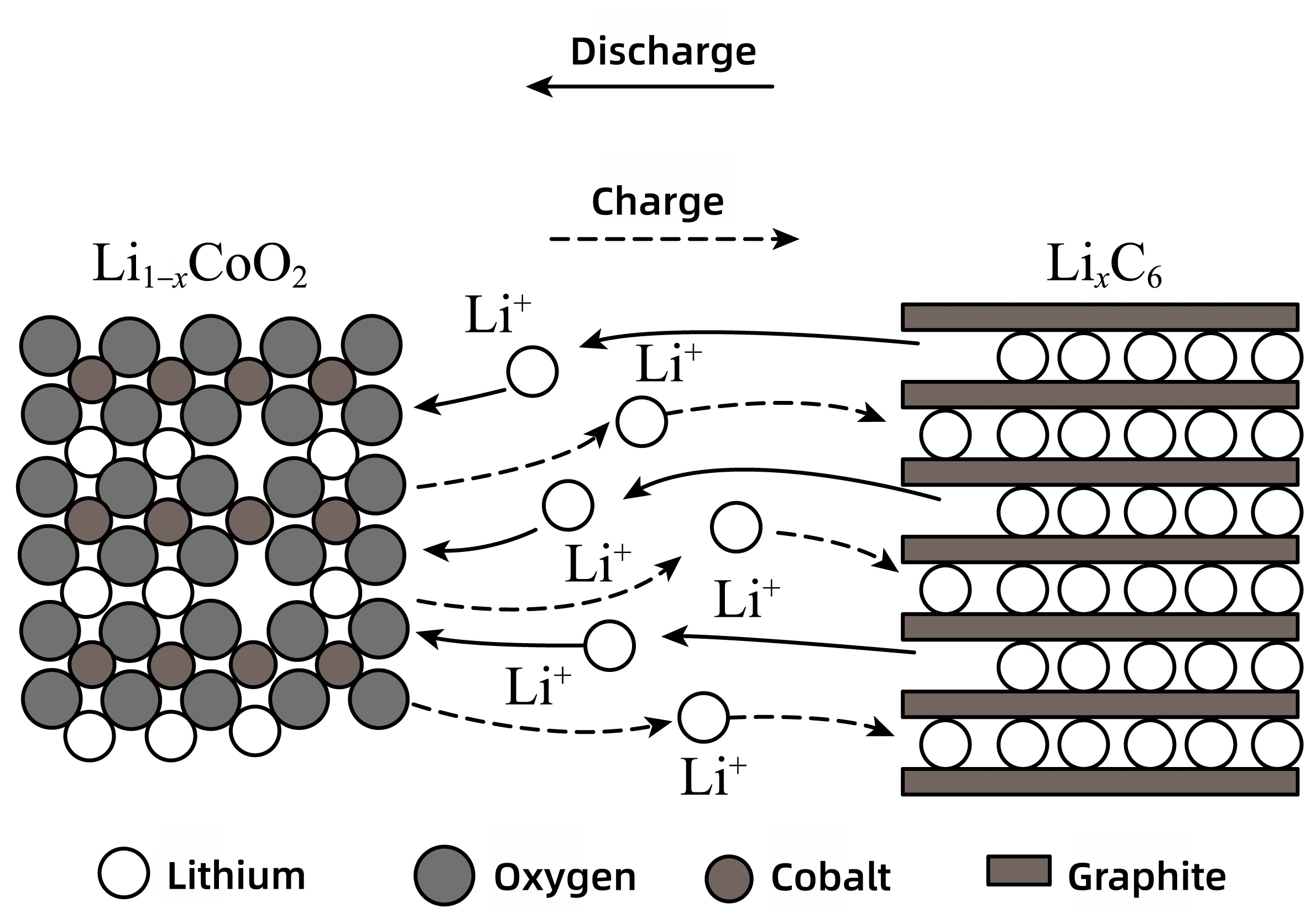
The Lithium Battery Working Principle is based on reversible ion movement. During charging, lithium ions move from the cathode to the anode. During discharging, they move back from the anode to the cathode while electrons flow through an external circuit to power a device or load.
A simple way to understand the process:
The battery has two electrodes: a cathode and an anode.
Lithium ions move through the electrolyte inside the cell.
Electrons cannot pass through the electrolyte, so they travel through the external circuit.
That external electron flow is the electrical current used to power equipment.
In short, ions move inside the battery, while electrons move outside the battery. The controlled separation of ion movement and electron flow is what makes the battery useful as an energy storage device.
This principle is shared by many lithium-ion chemistries, but cell materials, voltage range, safety profile, and cycle life vary by battery type.
_____________________________________________________________________
How Does a Lithium Battery Work? Main Components
Understanding Lithium Battery Components helps explain why battery quality depends on much more than capacity alone. A professional lithium battery pack includes cells, safety systems, structure, and electronic control.
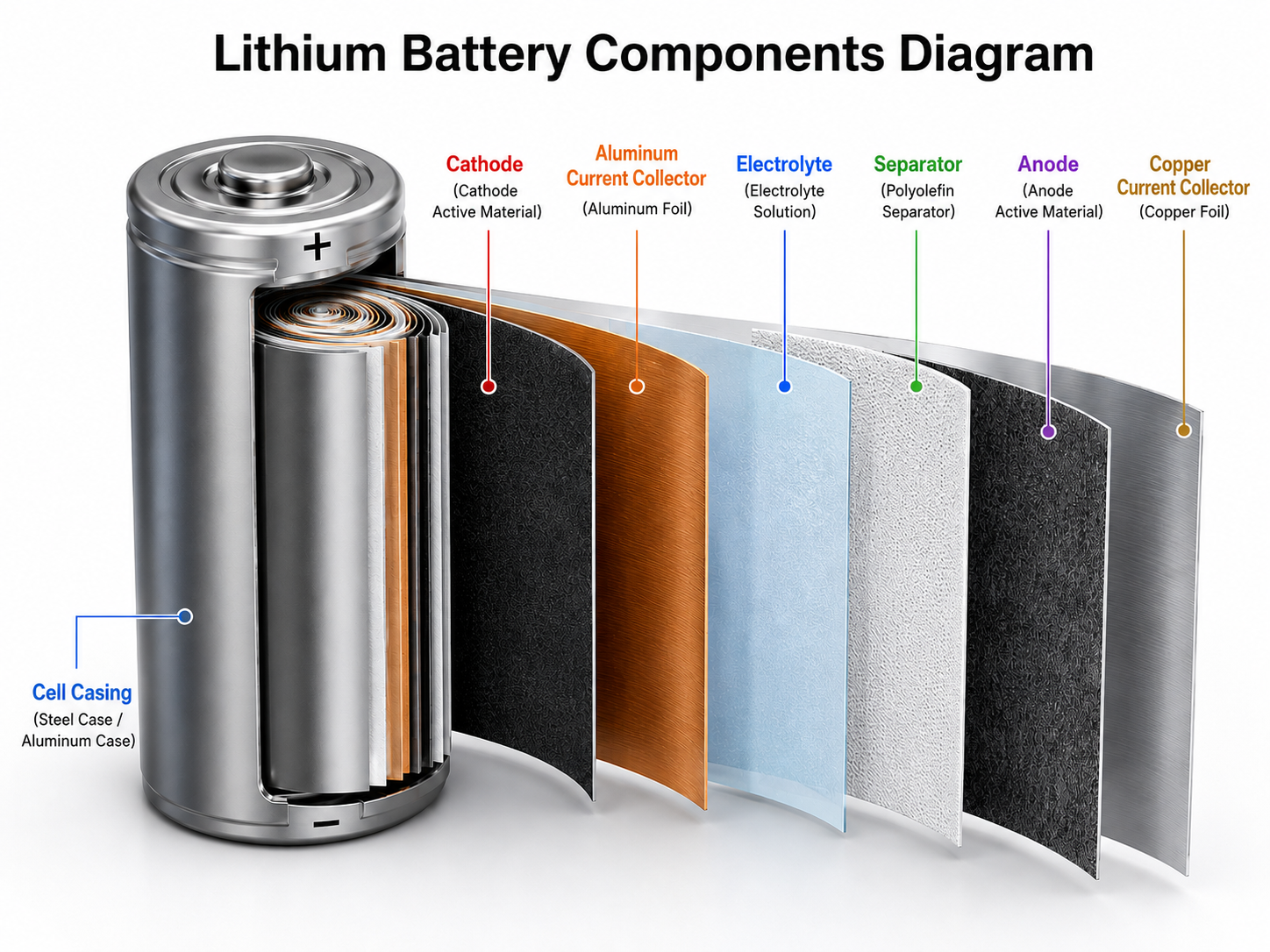
Cathode
The cathode is the positive electrode during discharge. Its chemistry strongly influences voltage, capacity, safety, lifespan, and cost. Common cathode materials include lithium iron phosphate for LiFePO4 batteries and nickel manganese cobalt oxide for NMC batteries.
Anode
The anode is the negative electrode during discharge. In many lithium-ion cells, the anode is graphite-based. During charging, lithium ions are stored in the anode structure. During discharging, they leave the anode and move back toward the cathode.
Electrolyte
The electrolyte allows lithium ions to move between the cathode and anode. It must support ion transport while remaining chemically compatible with the cell materials. Electrolyte quality affects performance, safety, temperature behavior, and battery life.
Separator
The separator is a thin porous material placed between the cathode and anode. It prevents direct electrical contact between electrodes while allowing lithium ions to pass through. A reliable separator is critical because internal short circuits can create serious safety risks.
Battery Management System
In a complete battery pack, the BMS monitors and protects the cells. It checks voltage, current, temperature, state of charge, and balancing status. For B2B energy storage products, BMS design is a major factor in safety, reliability, and system integration.
_____________________________________________________________________
How Does a Lithium Battery Work to Store Energy?
Lithium batteries store energy through chemical changes inside the cell. When a charger supplies power, lithium ions are moved into a higher-energy state at the anode. The battery holds that stored energy until a load is connected.
The amount of energy a battery can store depends on:
Cell chemistry.
Electrode material capacity.
Cell size and design.
Pack configuration.
Voltage and amp-hour rating.
Usable depth of discharge.
Battery management settings.
This is why two batteries with the same nominal capacity may perform differently in real applications. Cell quality, BMS limits, discharge rate, temperature, and inverter compatibility all influence usable energy.
For solar and backup systems, the practical question is not only “how much energy is stored,” but also “how much energy can be safely and repeatedly used over the battery’s lifetime.”
_____________________________________________________________________
What Happens During Charging?
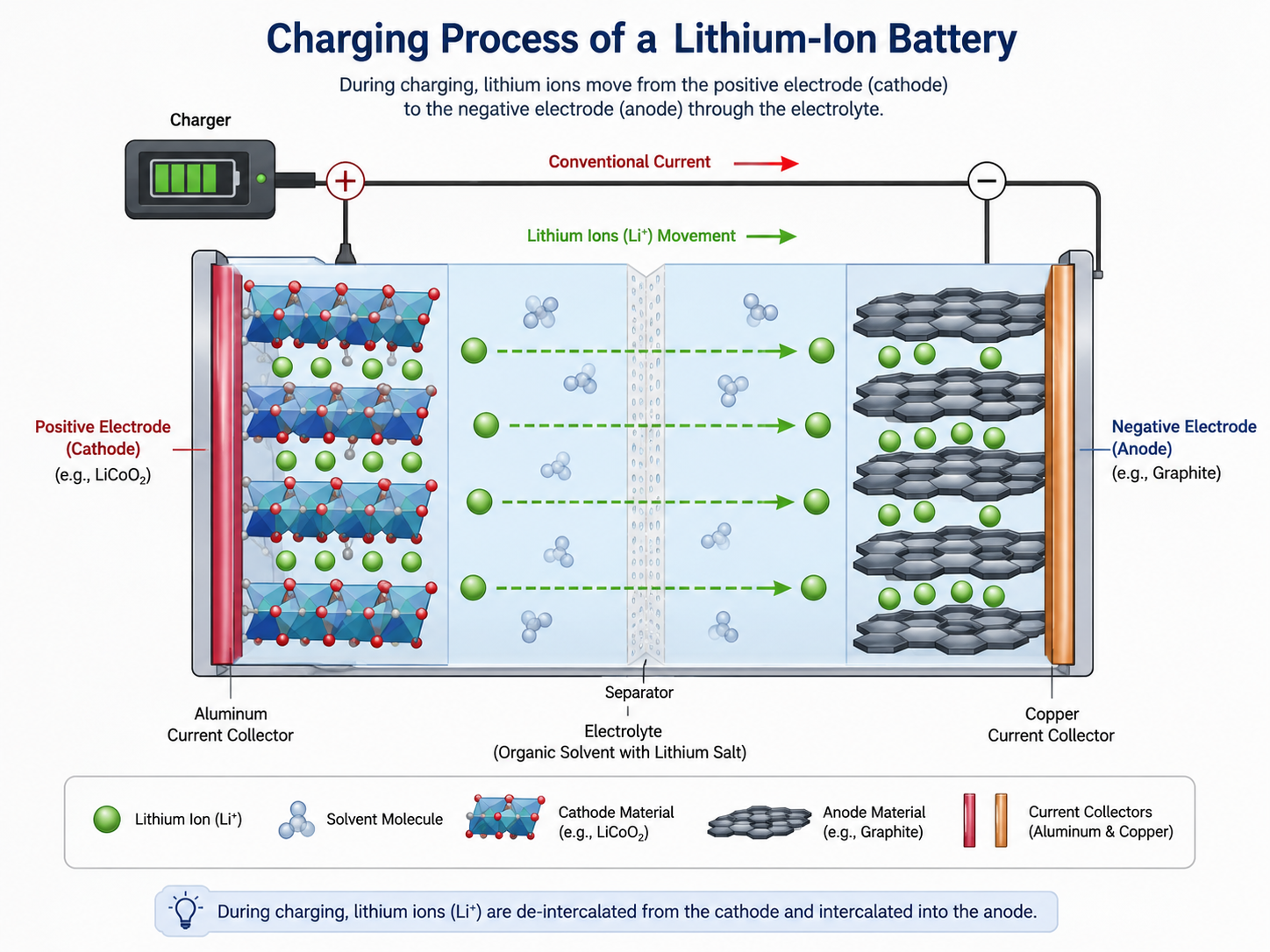
The Lithium Battery Charging Process begins when a charger, solar charge controller, or inverter applies controlled voltage and current to the battery.
During charging:
Lithium ions move from the cathode toward the anode.
Electrons are pushed through the external circuit.
The anode stores lithium ions in its structure.
The BMS monitors voltage, current, and temperature.
Charging slows or stops when the battery reaches its safe upper voltage limit.
Correct charging is essential. Overcharging can damage cells, shorten lifespan, and increase safety risk. That is why lithium batteries require compatible chargers, proper charging profiles, and reliable BMS protection.
In solar storage systems, charging may come from solar panels through a charge controller or hybrid inverter. The system must match the battery’s voltage range and communication requirements.
_____________________________________________________________________
What Happens During Discharging?
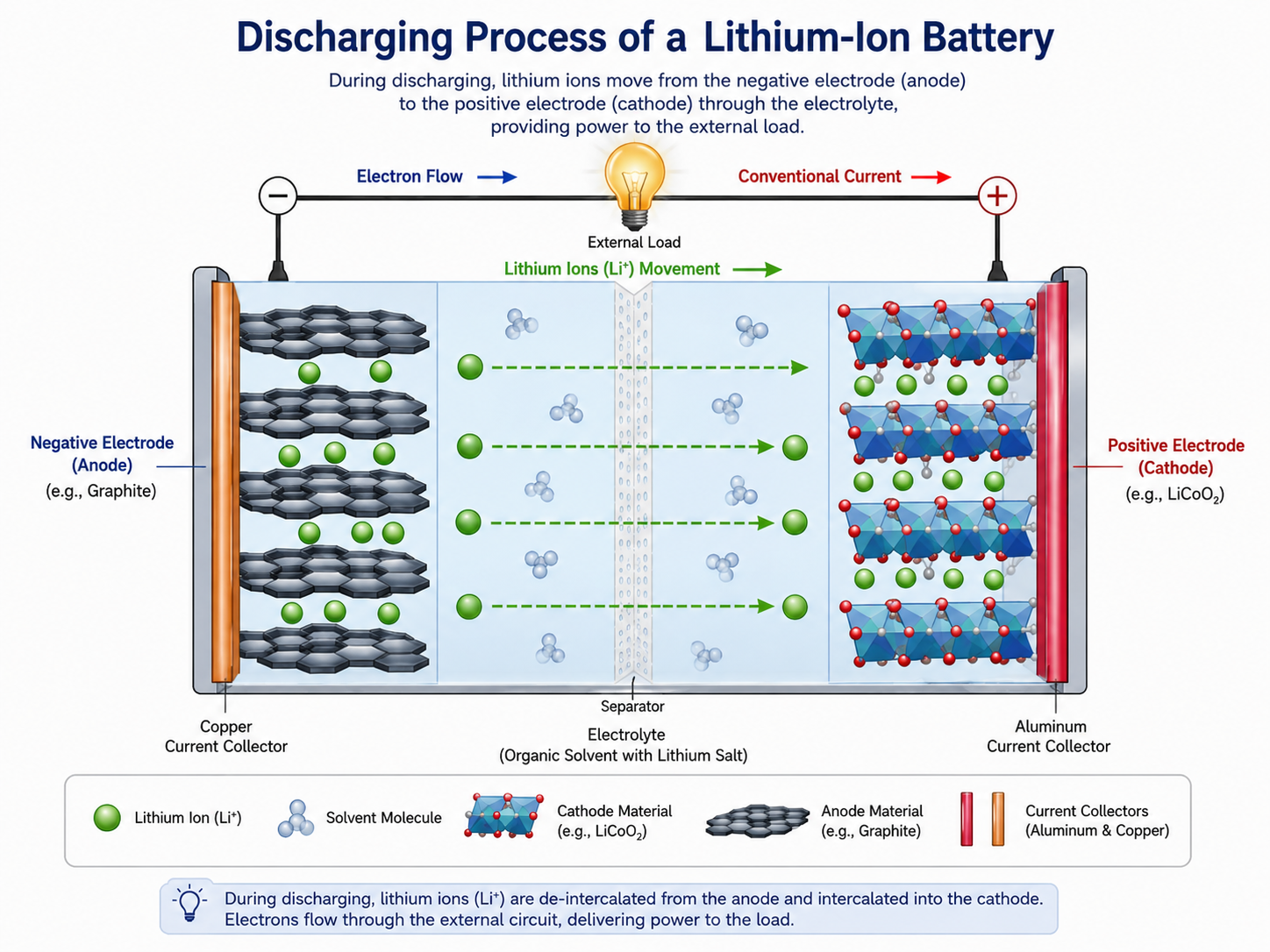
The Lithium Battery Discharging Process happens when the battery supplies power to a load. During discharge, lithium ions move from the anode back to the cathode. At the same time, electrons flow through the external circuit to deliver usable electrical power.
During discharging:
The battery releases stored chemical energy.
Lithium ions move internally through the electrolyte.
Electrons move externally through wiring and devices.
The voltage gradually changes as the battery state of charge decreases.
The BMS prevents over-discharge and excessive current draw.
Over-discharge can harm lithium cells. A quality BMS disconnects or limits output before voltage falls below safe limits. This protection is especially important in energy storage systems, portable power stations, and RV batteries that may be deeply discharged.
_____________________________________________________________________
How Lithium Ions Move Between Electrodes
Lithium Ion Movement is the core of lithium battery operation. The ions are small enough to move through the electrolyte and separator, but the electrons are forced to travel through the external circuit.
This separation creates useful current. Inside the battery, lithium ions complete the chemical process. Outside the battery, electrons power the device.
A simple diagram can show this clearly:
During charging: cathode → electrolyte → separator → anode.
During discharging: anode → separator → electrolyte → cathode.
Electron flow travels through the external circuit in the opposite direction needed to power the load.
This movement must remain balanced and controlled. If cells become unbalanced, overheated, overcharged, or physically damaged, performance and safety can decline. That is why cell matching, pack design, and BMS monitoring are essential in professional lithium battery products.
_____________________________________________________________________
The Role of Battery Management Systems (BMS)
A BMS in Lithium Battery systems acts as the battery’s control and protection center. It does not store energy itself, but it helps the battery operate within safe and efficient limits.
A professional BMS typically manages:
Overcharge protection.
Over-discharge protection.
Overcurrent and short-circuit protection.
Temperature monitoring.
Cell balancing.
State of charge estimation.
Communication with inverters or monitoring systems.
For energy storage distributors and solar installers, BMS compatibility can directly affect installation success. Many modern battery systems use CAN or RS485 communication to share battery status with hybrid inverters.
A strong BMS improves safety, extends usable lifespan, and helps the battery deliver more consistent performance. Related safety content can be linked through [Are Lithium Batteries Safe?].
Soft CTA: Explore LiFePO4 battery products
If you are comparing lithium battery platforms for solar storage, RV systems, or industrial backup, explore our LiFePO4 battery products to review voltage options, BMS features, communication compatibility, and deep-cycle performance.
_____________________________________________________________________
How LiFePO4 Batteries Work
The LiFePO4 Battery Working Principle follows the same basic lithium-ion movement described above, but the cathode material is lithium iron phosphate. This chemistry is known for strong thermal stability, long cycle life, and reliable deep-cycle performance.
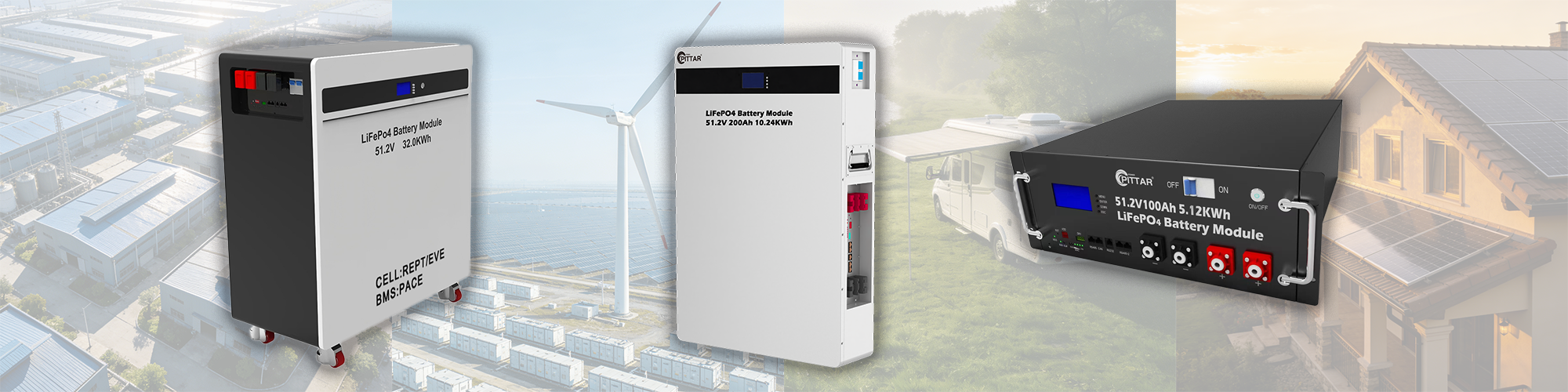
LiFePO4 batteries are commonly used in solar storage, home backup, portable power stations, RV batteries, marine systems, and industrial energy storage. They are often selected when safety, lifespan, and daily cycling matter more than maximum energy density.
Compared with some other lithium-ion chemistries, LiFePO4 usually has a lower energy density but a strong lifecycle value. For deeper chemistry education, link this section to [What Is LiFePO4 Battery?].
_____________________________________________________________________
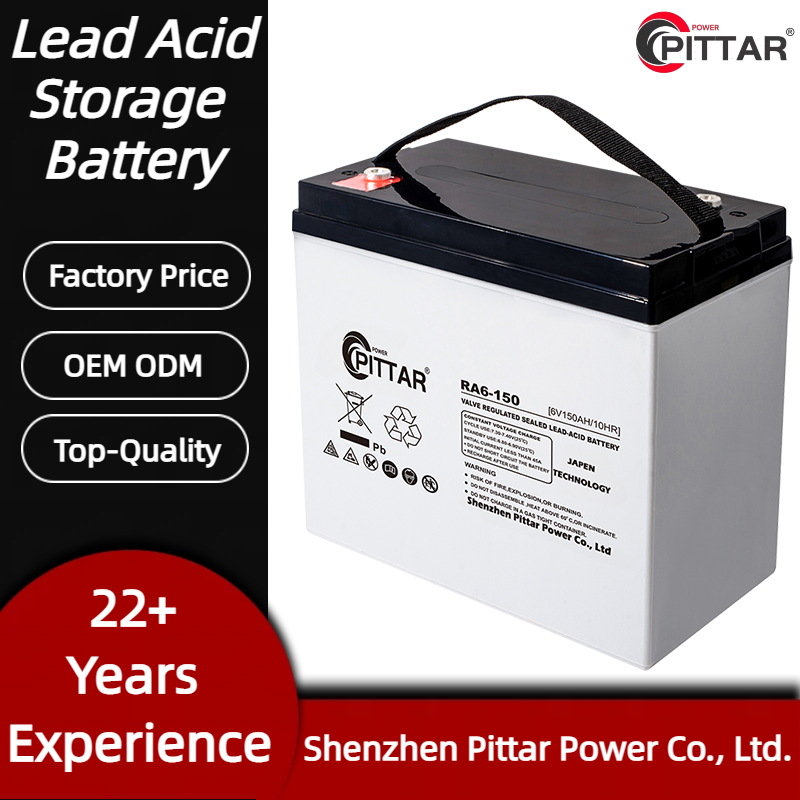
Why Lithium Batteries Are More Efficient Than Lead Acid Batteries
Lithium batteries are generally more efficient than lead acid batteries because they have lower internal resistance, better charge acceptance, higher usable depth of discharge, and stronger round-trip efficiency.
Key differences include:
Usable capacity: Lithium batteries often allow deeper discharge without the same level of lifespan penalty.
Charging speed: Lithium batteries can usually charge faster with compatible equipment.
Energy loss: Less energy is lost as heat during charge and discharge.
Maintenance: Lithium batteries do not require watering or equalization charging.
Weight: Lithium batteries are lighter for similar usable energy.
For buyers comparing battery platforms, the better question is not only upfront price. It is total lifecycle value: usable capacity, replacement frequency, maintenance, efficiency, installation constraints, and warranty. For comparison content, link to [Lithium Battery vs Lead Acid Battery].
_____________________________________________________________________
How Does a Lithium Battery Work in Real Applications?
Because lithium batteries combine high efficiency, compact size, and rechargeable performance, they are widely used across consumer, commercial, and industrial markets.
Solar Energy Storage
In solar projects, lithium batteries store energy generated during the day for use at night, during outages, or during peak electricity pricing. A lithium battery system can increase solar self-consumption and improve energy independence. For buying guidance, link to [Best Lithium Battery for Solar Storage].
Soft CTA: Explore solar energy storage batteries
For solar installers and energy storage distributors, our solar energy storage batteries are designed to support reliable backup, scalable capacity, inverter communication, and long-term deep-cycle operation.
Portable Power Stations
Portable power stations use lithium battery packs to provide AC and DC power in a compact product. They are used for camping, field work, emergency power, outdoor events, and mobile charging. Link this section to [Portable Power Station] product or guide pages.
Soft CTA: Explore portable power station batteries
If you are developing portable power products, compare our portable power station battery solutions for cycle life, discharge power, safety protection, and solar charging compatibility.
Home Backup Systems
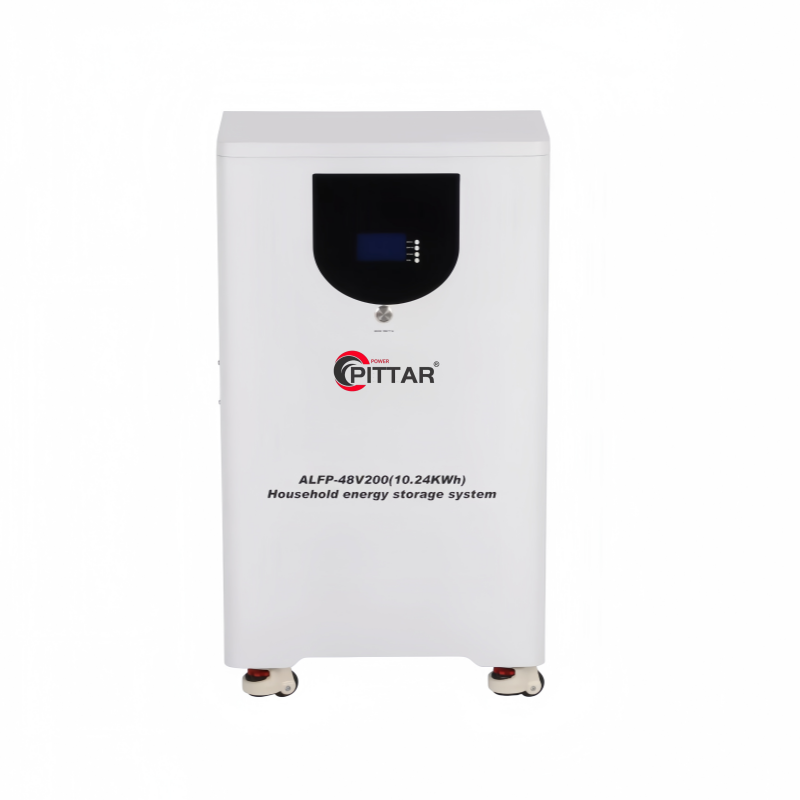
Home backup batteries store energy from solar panels or the grid and supply power when outages occur. They can support refrigerators, routers, lights, medical devices, and essential household loads. Link to [Home Energy Storage Battery Guide] for system sizing and installation guidance.
RV Batteries
RV users choose lithium batteries because they are lighter, provide more usable capacity, charge faster, and support off-grid living when paired with solar panels. LiFePO4 is especially common in RV and marine systems.
_____________________________________________________________________
Frequently Asked Questions
How Does a Lithium Battery Work?
A lithium battery works by moving lithium ions between the cathode and anode. During charging, ions move to the anode for storage. During discharging, ions move back to the cathode while electrons flow through an external circuit to power a load.
What is the main working principle of a lithium battery?
The main working principle is reversible lithium ion movement between electrodes. Ions move inside the battery through the electrolyte, while electrons move through the external circuit to create usable electrical current.
What happens during lithium battery charging?
During charging, lithium ions move from the cathode to the anode, and energy is stored chemically inside the cell. The BMS monitors voltage, current, and temperature to prevent unsafe charging.
What happens during lithium battery discharging?
During discharging, lithium ions move from the anode back to the cathode, while electrons flow through the external circuit. This electron flow powers devices, appliances, or energy storage loads.
What are the main components of a lithium battery?
The main components include the cathode, anode, electrolyte, separator, cells, enclosure, electrical connections, and battery management system. Each component affects performance, safety, and lifespan.
Why is a BMS important in a lithium battery?
A BMS protects the battery from overcharge, over-discharge, overcurrent, short circuit, and unsafe temperatures. It also balances cells and may communicate with inverters or monitoring systems.
How does a LiFePO4 battery work?
A LiFePO4 battery works through the same lithium-ion movement as other lithium batteries, but it uses lithium iron phosphate as the cathode material. This chemistry provides strong safety, long cycle life, and stable deep-cycle performance.
How long does a lithium battery last?
Lifespan depends on chemistry, cell quality, depth of discharge, temperature, charging profile, and BMS design. For a detailed lifespan guide, use [How Long Does a Lithium Battery Last?].
_____________________________________________________________________
Conclusion
How Does a Lithium Battery Work can be answered simply: lithium ions move between two electrodes to store and release energy, while electrons flow through an external circuit to power a load. Behind that simple explanation is a carefully engineered system of cathode, anode, electrolyte, separator, cells, enclosure, and BMS protection.
For B2B buyers, solar professionals, engineers, and home energy storage users, understanding the working principle makes it easier to compare chemistries, evaluate safety, choose compatible inverters, and estimate lifetime value. Whether theapplication is solar energy storage, a portable power station, home backup, or RV power, the quality of the cells, BMS, and system design determines real-world performance.
 Hot News
2026-08-20
2026-08-16
2026-08-12
2026-08-03
2026-07-30
2026-07-26

Pittar Power is a professional manufacturer specializing inenergy storage solutions.
Room 302, Building 1, No. 10, Huangjin First Road, Nancheng District, Dongguan City, Guangdong Province, China
Copyright © Shenzhen Pittar Power Co., Ltd. All Rights Reserved Privacy Policy
 EN
EN