Introduction.
The term Solar Battery vs Lithium Battery combines two different buying questions. A solar battery is defined by what it does: it stores energy from a photovoltaic system for later use. A lithium battery is defined by how it stores that energy: through a lithium-based electrochemical technology. A LiFePO4 unit installed behind a solar inverter is therefore both a lithium battery and a solar battery.
The comparison that procurement teams actually need is between battery technologies used in solar projects. That usually means comparing flooded lead-acid, AGM, gel, and lithium-based products against the operating profile of the site. The right choice depends on daily cycling, usable energy, power demand, access for maintenance, installation space, temperature, expected project life, and the cost of downtime.
For installers and system integrators, the issue is integration risk. For distributors, it is product range, serviceability, and warranty exposure. For commercial buyers, it is total ownership cost rather than initial purchase price. This article sets out the decision logic needed to compare technologies without treating any battery chemistry as the automatic answer for every project.
__________________________________________________________________________________________________
What Is a Solar Battery?
A solar battery is a rechargeable battery used to retain electricity generated by a photovoltaic array. The term describes the application, not a specific chemistry. A solar battery can be flooded lead-acid, AGM, gel, lithium-ion, LiFePO4, or another storage technology, as long as it is integrated into a system that charges it from solar generation and discharges it into DC or AC loads.
In practical project terms, the battery performs three jobs. It moves solar energy from the time it is produced to the time it is consumed, it supports loads when PV output falls, and it provides an energy reserve for outages or remote operation. The battery bank does not work in isolation. Its performance depends on PV generation, charge control, inverter behavior, load management, cabling, protection, and the installation environment.
Solar Storage Function |
Project-Level Effect |
Time shifting |
Surplus daytime PV can serve evening loads |
Backup reserve |
Selected circuits remain powered during a grid interruption |
Off-grid continuity |
Loads can operate when sunlight is unavailable |
Generator reduction |
A battery can reduce generator run time at remote sites |
Load management |
Operators can prioritize critical loads when energy is limited |
A battery project should therefore begin with an operating question: what energy must be available, for how long, at what power, and under which weather or grid conditions? The chemistry discussion comes after that question is defined.
__________________________________________________________________________________________________
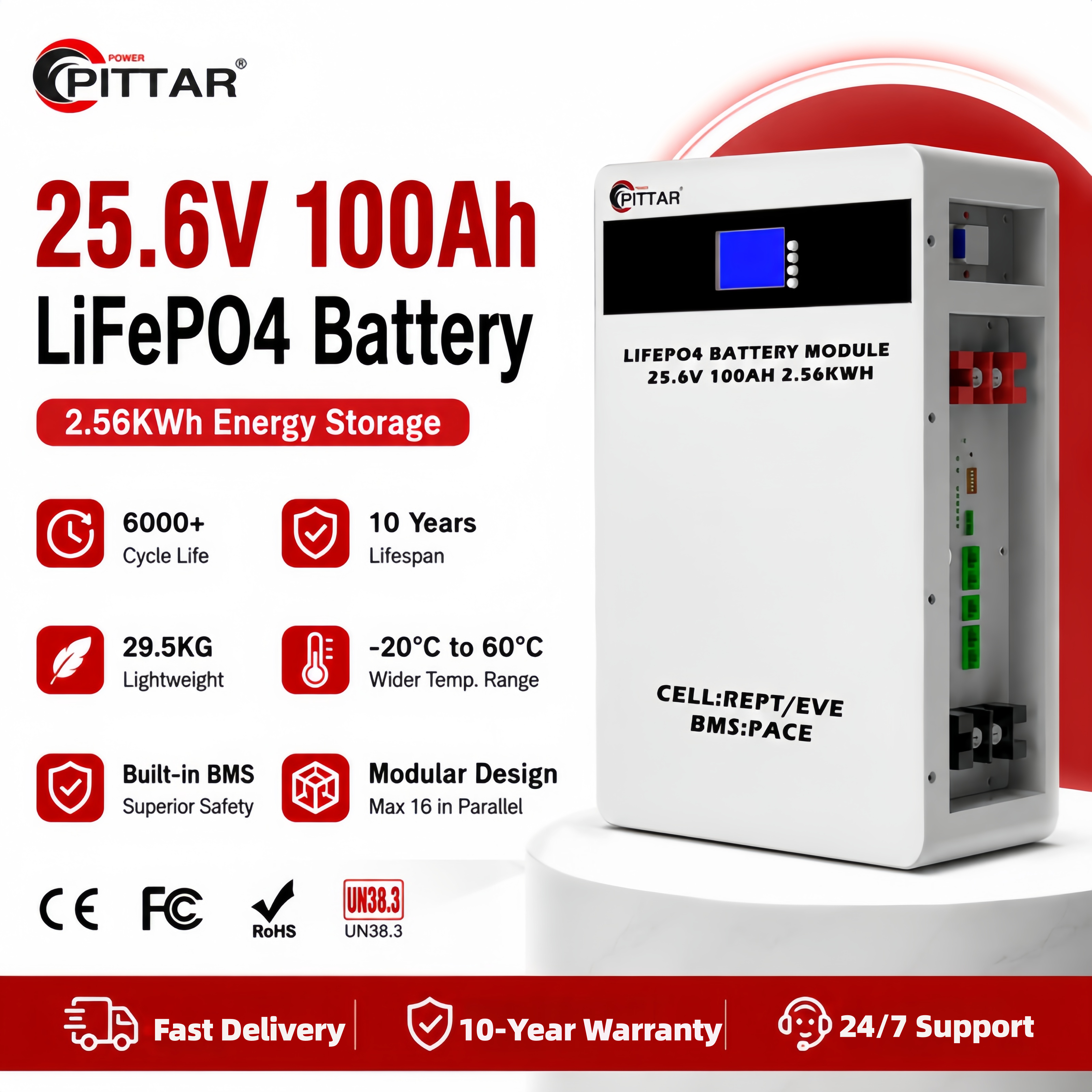
A lithium battery is a rechargeable battery that uses lithium-based materials to store and release energy. The term covers several chemist ries with different trade-offs in energy density, cycle behavior, cost, thermal characteristics, and power capability. For stationary solar storage, lithium iron phosphate—LiFePO4 or LFP—is widely used because it aligns well with frequent cycling, moderate-to-high usable capacity, and low-maintenance operation.
In a project specification, the chemistry label is not enough. A usable battery solution includes cells, interconnects, a Battery Management System (BMS), terminals, enclosure, thermal design, communication interfaces, approved charge limits, and documentation for fault behavior. The BMS is particularly important because it monitors voltage, current, temperature, and state of charge, then applies protection limits when operating conditions exceed the approved range.
Lithium products appear in residential storage, off-grid homes, RVs, telecom sites, commercial backup systems, and microgrids. Their suitability depends on the application. A compact battery may be appropriate for mobile equipment but unsuitable for a high-power commercial site. A rack battery may work well in an equipment room but not fit an outdoor, vibration-prone installation without the right enclosure and mounting design.
For a technical foundation on lithium battery technology, see [What Is a Lithium Battery?] .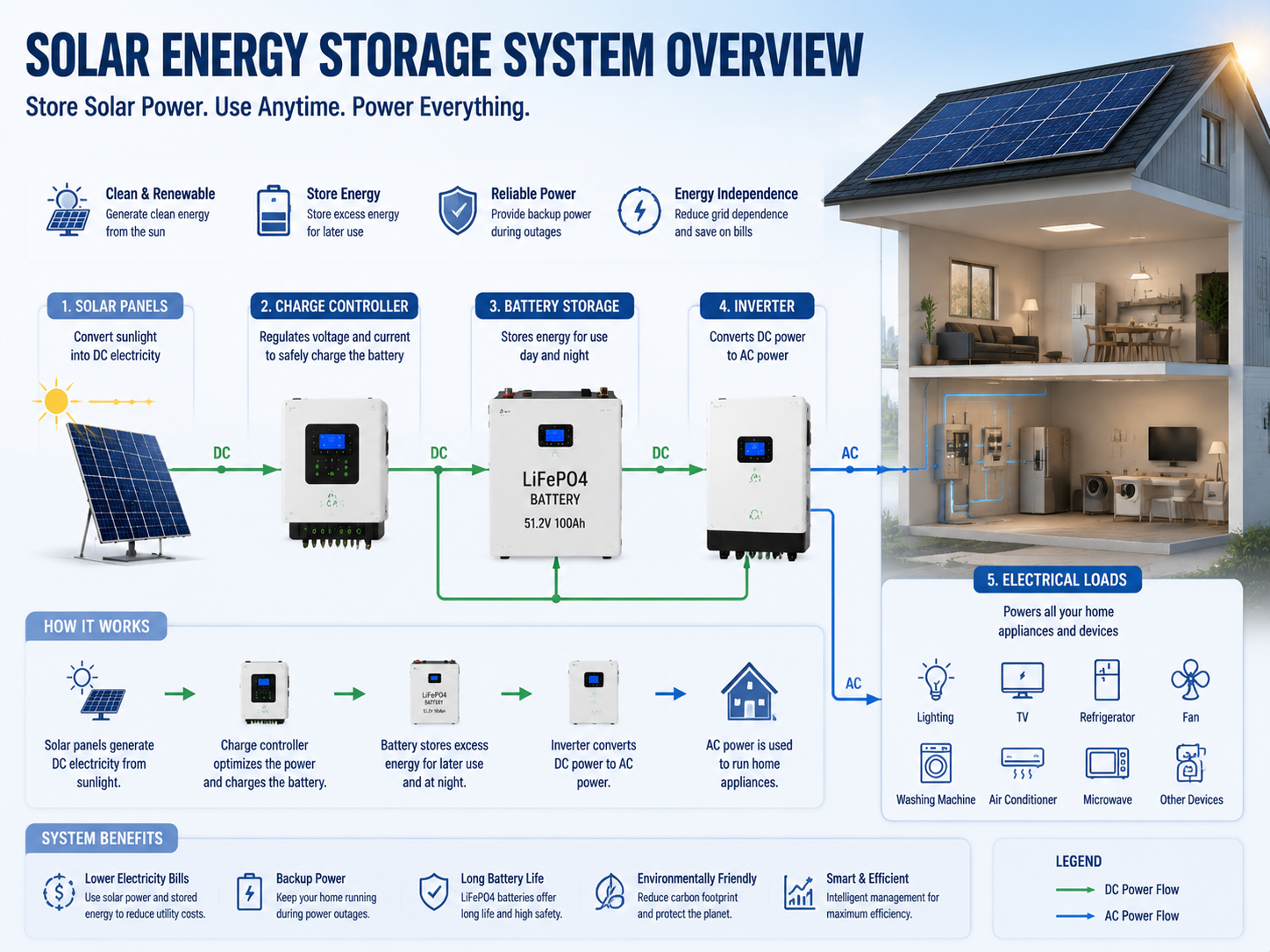
__________________________________________________________________________________________________
Solar Battery vs Lithium Battery: Understanding the Difference
The clearest distinction is this:
This means the two terms are not direct alternatives. A solar battery can be based on lead-acid, AGM, gel, or lithium technology. A lithium battery can be used in solar storage, but it can also be used in vehicles, telecommunications, portable equipment, or industrial backup applications.
Term |
What It Describes |
Example |
Solar battery |
Storage purpose in a PV system |
Battery bank storing afternoon PV surplus for nighttime loads |
Lithium battery |
Electrochemical technology |
LiFePO4 module with BMS protection |
LiFePO4 solar battery |
Technology plus application |
LFP battery bank connected to a hybrid inverter |
AGM solar battery |
Technology plus application |
AGM lead-acid battery in an RV or small backup system |
This distinction changes how buyers should evaluate suppliers. A request for a “solar battery” is incomplete until the buyer defines capacity, voltage, power, environment, charge equipment, maintenance model, and design life. A request for a “lithium battery” is equally incomplete until the buyer explains the application. Product selection should translate both terms into project requirements.
__________________________________________________________________________________________________
Comparing Solar Battery Technologies
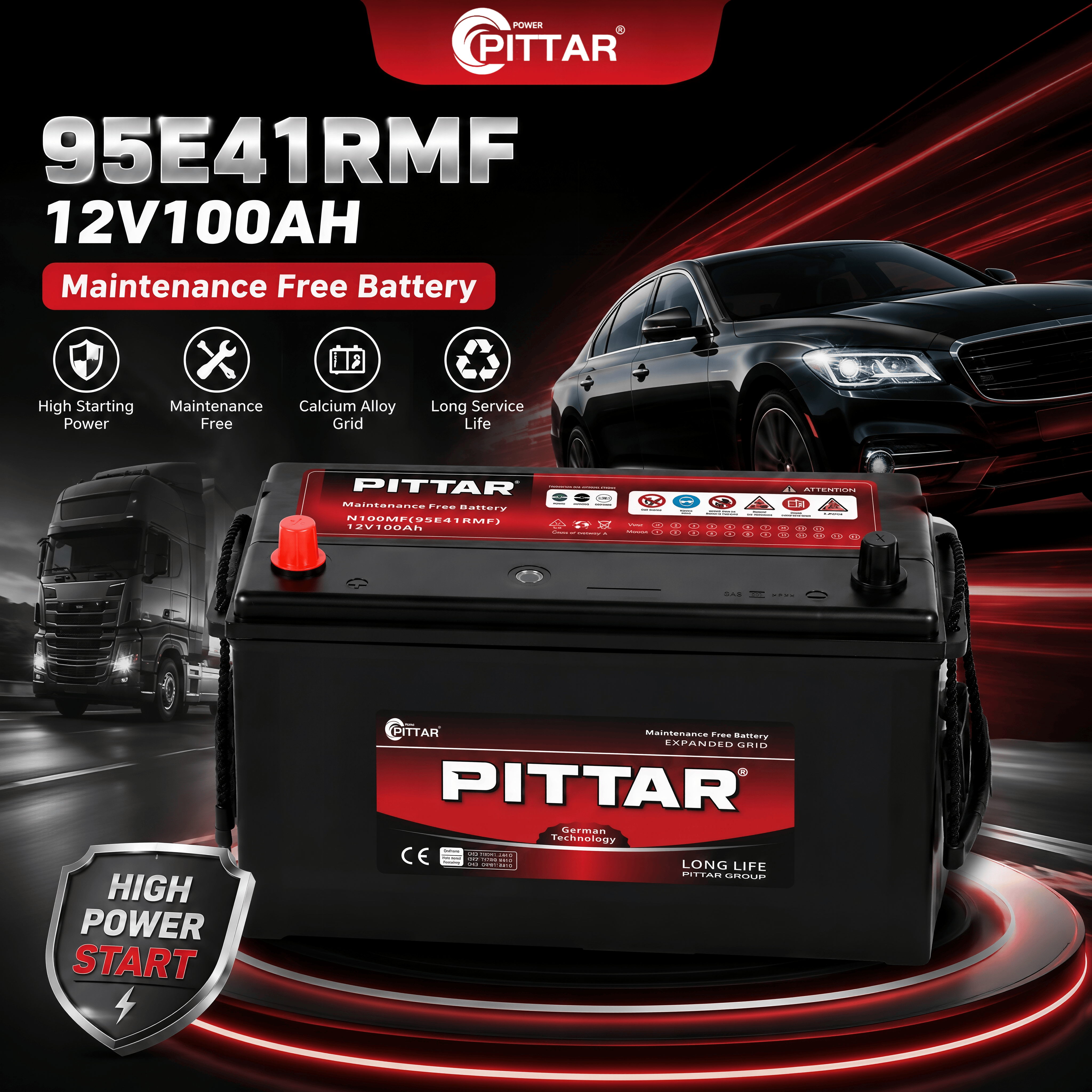
Traditional lead-acid, AGM, gel, and lithium-based storage products can all be used in solar applications. Their practical differences emerge when they are exposed to daily cycling, partial solar charging, high temperature, limited installation space, or restricted maintenance access.
Flooded lead-acid remains familiar to many installers. It can be available at a lower purchase price and has established service practices. Its limitations are weight, ventilation needs, periodic maintenance, lower usable depth of discharge when long life is required, and longer recharge behavior near full capacity.
AGM is a sealed lead-acid format. It avoids electrolyte watering and can be useful in certain backup, RV, and marine applications. It still requires a correct charging profile and carries the inherent weight and cycle limitations of lead-acid technology under frequent deep discharge.
Gel batteries use gelled electrolyte and are also sealed. They can fit selected applications where their charging requirements are well understood. Their charging behavior can be less forgiving when controllers are incorrectly configured, and their rate of charge acceptance can constrain solar recovery in some systems.
Lithium and LiFePO4 products generally provide higher usable energy, stronger charge acceptance, and lower routine maintenance for projects that cycle often. These benefits need to be weighed against higher initial cost, component compatibility, BMS behavior, supply support, and expansion policy.
Decision Factor |
Flooded Lead-Acid |
AGM |
Gel |
LiFePO4 |
Lifespan under solar duty |
Often shorter when repeatedly deeply cycled |
Dependent on charge profile and cycle depth |
Dependent on charge profile and cycle depth |
Often longer in frequent-cycle systems when correctly configured |
Usable capacity at comparable nominal rating |
Usually lower for long service life |
Moderate |
Moderate |
Often higher |
Frequent-cycle suitability |
Limited by deep discharge stress |
Better than flooded in some uses |
Application- dependent |
Often strong when correctly configured |
Efficiency |
Usually lower, particularly as charging approaches full capacity |
Moderate and profile-sensitive |
Moderate and profile-sensitive |
Usually higher within approved operating limits |
|
Routine maintenance |
Higher |
Low |
Low |
Low |
Weight and footprint |
High |
High |
High |
Lower for comparable usable energy |
Temperature |
Ventilation and |
Charger profile |
Charger profile |
BMS, temperature |
and protection |
electrolyte |
and |
and |
limits, and electronics |
considerations |
management |
temperature |
temperature |
integration |
Initial price |
Often lower |
Moderate |
Moderate |
Often higher |
Lifecycle cost in daily use |
Can rise through replacement and labor |
Project- dependent |
Project- dependent |
Often favorable if cycling is frequent |
These are directional comparisons, not a replacement for model-specific data sheets. Calendar lifespan and cycle life are related but not identical: a lightly used standby bank may age mainly with time, while a daily solar-shifting bank is more strongly affected by its cycle profile. Cycle life depends on depth of discharge, charge and discharge rate, temperature, and end-of-life capacity definition. A procurement review should compare products under equivalent test conditions rather than comparing headline claims from different data sheets.
__________________________________________________________________________________________________
Why Lithium Batteries Are Becoming Popular for Solar Energy Storage
Solar storage has moved beyond occasional backup. Many projects now use batteries every day to shift energy into the evening, reduce generator operation, support remote loads, or manage grid constraints. This duty cycle changes the selection criteria.
Frequent charging and discharging. A battery in a daily solar application must accept energy during the available PV window and return it later without creating excessive operating losses. LiFePO4 is often considered because it can support repeated cycles when current, temperature, and depth of discharge are kept within approved limits. The practical advantage is not a cycle number in isolation; it is the ability to design around a predictable daily operating routine.
Limited maintenance access. A remote site can make routine battery servicing expensive. Flooded lead-acid may be workable where site visits are already planned and operators can maintain electrolyte and ventilation requirements. Where visits are infrequent, maintenance burden becomes a commercial issue. The value of lower routine maintenance can be material for telecom shelters, rural commercial sites, farms, and distributed residential portfolios.
Higher usable energy demand. As home loads, refrigeration, communications equipment, pumps, and inverter-based appliances become more common, buyers need more usable kWh within a defined footprint. A chemistry that supports a higher usable portion of nominal capacity can reduce cabinet space, transport weight, and installation complexity.
Long service requirements. A system intended to operate for years should be evaluated around throughput, capacity retention, service process, and module availability. A low upfront price may lose its advantage if replacement intervals, labor, generator fuel, or downtime risk are high.
For buyers moving from general interest to a technology selection process, see [Best Lithium Battery for Solar Storage] .
__________________________________________________________________________________________________
How to Choose the Right Battery for a Solar System
The correct battery is selected from the load profile and operating plan, not from the chemistry label alone. The following questions should be answered before requesting quotations.
Energy consumption. Determine the daily kWh that the battery must support. Separate essential loads from flexible loads. A refrigeration load, a communications circuit, and a water pump may have very different consequences for storage sizing.
Backup requirements. Decide whether the battery is needed for evening self-consumption, a few hours of critical backup, one overnight period, or multiple days of off-grid autonomy. More backup time requires more usable energy and usually more PV capacity to recover the battery after discharge.
Battery capacity and power. Capacity in kWh determines duration. Power in kW, or current capability, determines what can operate simultaneously. Motor starting and compressor surge can drive inverter and BMS requirements even when daily energy consumption is modest.
Installation environment. Temperature, humidity, dust, vibration, salt exposure, ventilation, and service access all affect the battery specification. A battery room in a hot inland site, an RV compartment, an outdoor cabinet, and a coastal telecom enclosure should not be treated as the same environment.
Budget and lifecycle cost. Evaluate purchase price together with usable energy, replacement probability, maintenance labor, delivery logistics, warranty terms, conversion efficiency, and operational downtime. The relevant metric is often cost per usable delivered kWh over the intended service period.
Future expansion. Confirm whether the battery can be expanded by parallel modules, whether new modules must match age and firmware, whether the inverter supports the target capacity, and whether the PV array can recharge the larger bank.
Expansion policy should be known before the first purchase order is placed.
Buyer Question |
Technical Evidence to Request |
How much energy is usable? |
Nominal kWh, configured DoD, reserve policy, efficiency assumptions |
Can the bank support peak loads? |
Continuous and peak current, BMS limit, inverter surge data |
Will it work with the inverter? |
Approved compatibility list, protocol, firmware requirements |
Is the warranty comparable? |
Capacity retention, throughput, exclusions, claim process |
Does it fit the site climate? |
Charge/discharge temperature range, enclosure, heating or ventilation needs |
Can it scale later? |
Module rules, rack limits, PV recharge plan, support availability |
__________________________________________________________________________________________________
LiFePO4 Battery vs Traditional Solar Batteries
LiFePO4 is widely considered for modern solar storage because it fits several common project conditions: repeated cycling, restricted maintenance access, higher usable capacity requirements, modular installation, and system monitoring. It is not always the right answer.
A seasonal cabin with light loads, existing lead-acid charging equipment, ample installation space, and a strict capital budget may still justify AGM or flooded lead-acid. A remote system with daily cycling, costly field visits, limited cabinet space, or a need to absorb solar energy quickly may place more value on LiFePO4. The difference comes from operating economics rather than branding.
Application Condition |
Technology Direction to Evaluate |
Daily solar self-consumption |
LiFePO4 is often worth evaluating for cycle behavior and usable energy |
Remote off-grid loads |
LiFePO4 may reduce service burden if the system is correctly designed |
RV or mobile solar |
Lower weight and usable capacity can favor LiFePO4 |
Low-cycle emergency reserve |
AGM or gel may remain commercially viable |
Legacy lead-acid system |
Compare retrofit compatibility, charger profile, and replacement cost |
Commercial site with service SLA |
Assess monitoring, warranty support, module replacement, and uptime risk |
For buyers assessing remote and autonomous projects, see [LiFePO4 Battery for Off-Grid Solar Systems] .
The specification should also look beyond chemistry. Ask whether the BMS provides meaningful alarms, whether remote monitoring is available, whether battery-inverter communication is supported, and whether service documentation is adequate for the local installer base. A technically capable battery can still create delays if integration and after-sales processes are weak.
__________________________________________________________________________________________________
Common Mistakes When Selecting a Solar Storage Battery
Selecting only on initial price. Purchase price is visible; replacement labor, lost operating hours, generator fuel, site visits, and unavailable usable capacity often are not. A decision based only on the first invoice can produce a higher cost over the system life.
Ignoring usable capacity. Nominal capacity is not the same as energy available to loads. The usable figure depends on DoD settings, battery reserve, system efficiency, temperature, and operating limits. Procurement comparisons should specify usable kWh at the intended configuration.
Ignoring cycle requirements. A standby system and a daily solar-shifting system impose different demands. Buyers should request cycle data under relevant test conditions and compare capacity-retention or throughput warranty terms.
Treating future expansion as a later problem. Adding a second bank may require matching model, module age, firmware, BMS communication, rack hardware, inverter capability, and PV charging capacity. If these conditions are not addressed in the initial design, expansion can become a replacement project.
Choosing incompatible components. A battery, inverter, controller, cables, disconnects, protection devices, and monitoring platform must operate as a coordinated system. Incorrect charge profiles, unsupported communications, inadequate current capability, or missing temperature protection create commissioning and warranty risk.
Treating climate as an afterthought. Heat can accelerate aging, while cold can limit charging and available capacity. Site conditions should shape enclosure, ventilation, heating, installation location, and operations planning before equipment is ordered.
Risk in the Purchase Process |
Better Buyer Action |
Quote compares Ah only |
Convert every option to usable kWh at intended voltage and DoD |
Warranty language is vague |
Ask for capacity, throughput, exclusions, and claims workflow |
No load schedule exists |
Require daily kWh, peak kW, and surge-load information |
Inverter is already fixed |
Validate battery communications and current limits before ordering |
Future loads are uncertain |
Reserve physical, electrical, and PV capacity for expansion |
__________________________________________________________________________________________________
Frequently Asked Questions
Is lithium battery better for solar storage? Lithium, especially LiFePO4, is often a strong fit where storage cycles frequently, maintenance access is limited, usable capacity matters, or integration with modern monitoring is required. It is not automatically better for every project. Low-cycle, budget-driven, or legacy applications may still use lead-acid, AGM, or gel products effectively when their limits are accepted.
What type of battery is best for solar systems? There is no universal choice. The correct technology depends on daily energy demand, backup duration, cycle frequency, available maintenance, temperature, installation constraints, equipment compatibility, and lifecycle budget. LiFePO4 is widely evaluated for residential, off-grid, RV, and commercial projects because it aligns with many high-cycle applications.
How long do solar lithium batteries last? Actual service life depends on the cycle profile, depth of discharge, temperature, charging behavior, BMS protection, system design, and maintenance. Buyers should review cycle-test conditions, capacity- retention guarantees, and energy-throughput warranty terms rather than rely on a single year claim.
Are LiFePO4 batteries suitable for off-grid solar? They are widely used in off-grid projects because they can provide strong deep-cycle performance, high usable capacity, efficient charging, and lower routine maintenance. Final suitability depends on sizing, low-temperature protection, inverter and controller compatibility, generator strategy, and local service capability.
__________________________________________________________________________________________________
Final Considerations Before Choosing a Solar Battery
A sound purchasing decision should end with a project checklist rather than a generic technology preference:
The strongest solar storage projects are not built around a chemistry claim. They are built around a documented load profile, compatible equipment, reliable protection, realistic operating conditions, and a supplier that can support the system through its intended service life.
 Hot News
2026-08-20
2026-08-16
2026-08-12
2026-08-03
2026-07-30
2026-07-26

Pittar Power is a professional manufacturer specializing inenergy storage solutions.
Room 302, Building 1, No. 10, Huangjin First Road, Nancheng District, Dongguan City, Guangdong Province, China
Copyright © Shenzhen Pittar Power Co., Ltd. All Rights Reserved Privacy Policy
 EN
EN