The global energy storage industry achieved a historic breakthrough in 2025, with annual installations exceeding 100 GW for the first time ever. This milestone was reached despite significant policy adjustments in the two largest energy storage markets, China and the United States.
China recently removed the mandatory requirement for renewable energy projects to include energy storage systems, shifting instead toward a more market-driven approach. While this transition could create stronger long-term market efficiency, it also introduces uncertainty around future project revenues.
Meanwhile, the United States continues to maintain tax incentives for energy storage deployment. However, tightening supply chain regulations and restrictions related to Chinese battery components are creating new challenges for project developers and manufacturers.
Industry analysts believe, “What to Look for in 2026: Global Storage,” five major trends are expected to influence the global storage industry throughout the coming year.
1. Global Supply Chains Continue to Evolve
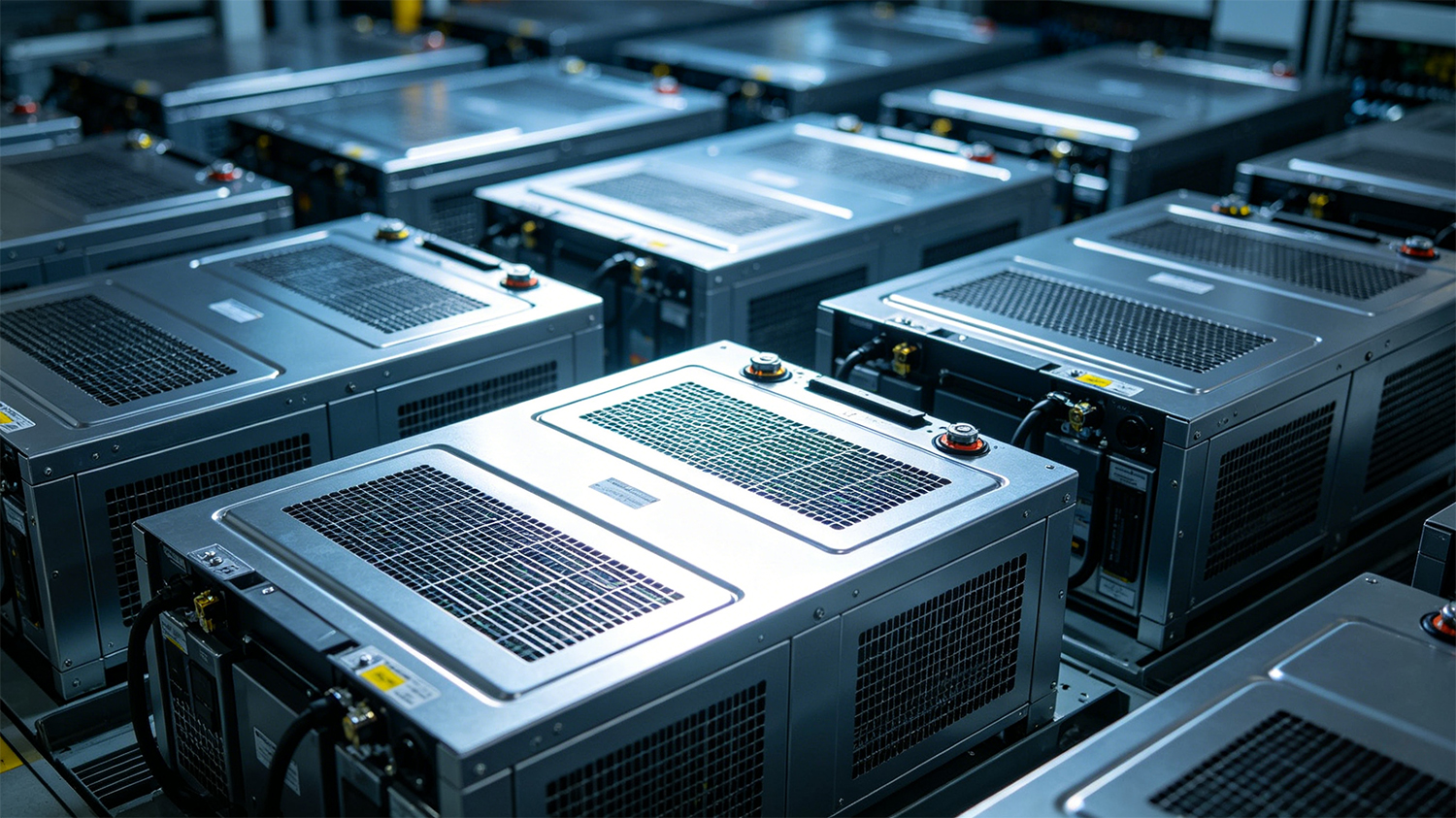
China still dominates the global energy storage supply chain, including raw material processing, battery cell manufacturing, component production, and system integration. However, rising domestic competition, overcapacity, and stricter local-content requirements are pushing many manufacturers to expand operations overseas in order to avoid tariffs and access international markets more efficiently.
Wood Mackenzie noted that Chinese companies are accelerating investments in regions such as Southeast Asia, South Asia, Europe, and the Middle East. Their strategy focuses on strengthening global market presence, even if profit margins remain limited in the short term.
At the same time, supply constraints are expected to remain an issue through the first half of 2026. Certified battery products from leading suppliers are facing particularly strong demand, which continues to pressure the market. Industry analysts expect pricing to gradually stabilise during the second half of the year.
2. Grid-Forming Storage Becomes Mainstream
Grid-forming battery storage systems are increasingly becoming a necessity rather than an optional technology in many power markets. These systems help stabilise voltage and frequency, which is becoming more important as conventional coal and gas power plants retire.
Australia is one example, where approximately 75% of coal-fired generation capacity is expected to leave the market by 2035. As renewable penetration increases, grid-forming storage will play a critical role in maintaining system reliability.
Technology improvements are also reducing costs. Previously, grid-forming systems could cost 10% to 15% more than conventional storage solutions. Today, many manufacturers are integrating these capabilities into standard products with minimal additional cost.
3. Alternative Battery Technologies Gain Momentum
Although lithium-ion batteries remain the dominant storage technology globally, alternative solutions are expanding rapidly. Sodium-ion batteries, flow batteries, and iron-air technologies are attracting growing interest as they become more commercially viable for specific applications.
Wood Mackenzie highlighted increasing investments in non-lithium technologies across key markets including China and Australia. These technologies are particularly attractive for long-duration energy storage applications.
In Europe, supportive government policies are helping accelerate adoption. Countries such as the United Kingdom and Italy are introducing “cap and floor” mechanisms designed to improve investment security and make long-duration storage projects more financially attractive.
4. Data Centres Accelerate Battery Demand
The rapid growth of artificial intelligence and large-scale data centres is creating a major new demand driver for battery storage systems. Many data centre operators are installing onsite battery storage to overcome grid connection delays and power limitations.
AI-related computing workloads can fluctuate dramatically within milliseconds, requiring highly flexible energy systems. Battery storage is increasingly being used to manage these rapid load changes effectively.
Although gas turbines remain the preferred option for onsite backup generation, battery systems have now become the second most common technology choice within new data centre development pipelines.
5. Hybrid Renewable Projects Expand Rapidly
Developers are increasingly combining battery storage with solar and wind projects. These hybrid systems help reduce renewable energy curtailment, which occurs when electricity generation exceeds what the grid can absorb.
In countries such as Australia and India, more than half of the storage projects announced during 2025 included integrated solar, wind, or hybrid renewable configurations.
Market data indicates that hybrid and co-located systems represented around 30% of Australia’s storage capacity additions last year. In many new solar-plus-storage projects, battery capacity now exceeds the size of the paired solar generation system. This oversized approach allows project owners to access additional revenue streams, including grid arbitrage and ancillary services.
Europe is experiencing a similar trend. In some regions, electricity markets recorded more than 500 hours of negative power prices annually, reducing profitability for standalone renewable projects. As a result, developers are increasingly turning to hybrid power purchase agreements (PPAs) to improve revenue stability.
Regional Market Outlook
Looking ahead, continued declines in storage system costs, ongoing technological innovation, and the expansion of new application scenarios are expected to support strong market growth over the next decade.
China is expected to remain the world’s largest market for energy storage capacity growth. In contrast, the United States market may experience slower growth during 2026 and 2027 due to tariff adjustments and ongoing supply chain restructuring.
Europe remains one of the fastest-growing regions globally. Energy storage installations in Europe surged by 160% in 2025. Germany continues to lead in distributed and residential storage systems, while the United Kingdom dominates the utility-scale storage segment.
Latin America is also emerging as a promising growth market. Brazil plans to launch a national storage auction in early 2026, while Chile is updating market regulations to better compensate storage projects for grid support services.
The global energy transition continues to accelerate. Energy storage is no longer viewed simply as a backup solution — it is increasingly becoming a core technology for ensuring future grid stability, flexibility, and reliability.
 Hot News
2026-08-20
2026-08-16
2026-08-12
2026-08-03
2026-07-30
2026-07-26

Pittar Power is a professional manufacturer specializing inenergy storage solutions.
Room 302, Building 1, No. 10, Huangjin First Road, Nancheng District, Dongguan City, Guangdong Province, China
Copyright © Shenzhen Pittar Power Co., Ltd. All Rights Reserved Privacy Policy
 EN
EN