Introduction
How to Maintain a Lithium Battery is a practical question for anyone using lithium batteries in solar energy storage, home backup systems, RVs, marine power, portable power stations, and commercial energy storage. Lithium batteries generally require less routine maintenance than lead-acid batteries, but they are not maintenance-free. Correct charging, temperature control, proper storage, clean connections, and Battery Management System monitoring all affect long-term battery health.
This guide explains lithium battery maintenance in beginner-friendly language while staying technically accurate for B2B battery buyers, distributors, installers, and energy storage users. It also supports the lithium battery pillar page [What Is a Lithium Battery?] and connects with lifecycle topics such as [How Long Does a Lithium Battery Last?] and [How Many Cycles Can a LiFePO4 Battery Provide?].
________________________________________________________________
Why Lithium Battery Maintenance Matters
Lithium battery maintenance matters because it affects lifespan, safety, performance, warranty compliance, and total cost of ownership. A lithium battery may have a long cycle-life rating on paper, but poor operating conditions can reduce real-world performance.
Good maintenance helps users:
Preserve usable capacity.
Reduce unnecessary cycle-life loss.
Avoid unsafe charging or temperature conditions.
Detect wiring or BMS issues early.
Protect warranty eligibility.
Reduce replacement frequency.
Improve system uptime in solar, backup, RV, marine, and commercial applications.
For energy storage distributors and B2B buyers, maintenance is also a customer-experience issue. A properly installed and maintained lithium battery system is more likely to deliver predictable performance over its service life.
________________________________________________________________
Do Lithium Batteries Need Maintenance?
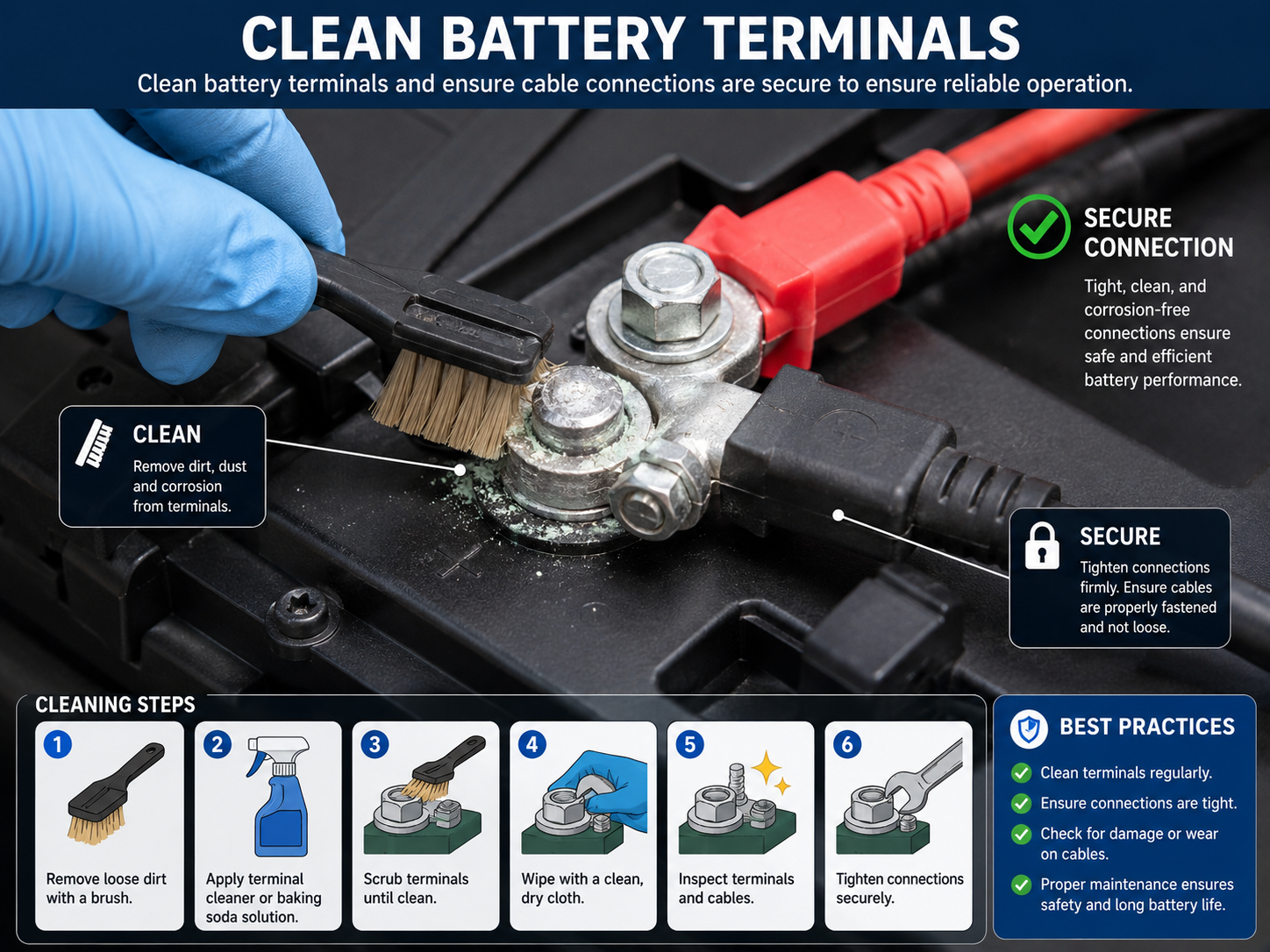
Yes, but lithium batteries are usually low-maintenance, not zero-maintenance. Compared with flooded lead-acid batteries, lithium batteries do not require watering, equalization charging, acid-level checks, or corrosion cleaning caused by vented electrolyte. However, they still require correct charger settings, suitable temperatures, clean terminals, secure cables, and attention to battery health data.
Maintenance Area |
Lithium Battery |
Lead-Acid Battery |
Watering |
Not required |
Required for flooded types |
Equalization |
Usually not required |
Often used for flooded batteries |
Ventilation |
Needed for heat management |
Needed for gas/acid concerns in some types |
Charger settings |
Critical |
Critical |
Terminal checks |
Recommended |
Recommended |
Storage management |
Recommended |
Recommended |
Monitoring |
BMS-based |
Voltage/specific gravity depending on type |
For a deeper comparison, see [LiFePO4 vs Lead Acid Battery].
________________________________________________________________
Key Lithium Battery Maintenance Principle
The best way to maintain a lithium battery is to keep it within the operating limits defined by the manufacturer. Most problems come from wrong charging settings, excessive heat, deep discharge, long-term poor storage, or ignoring system warnings.
Core principles include:
Principle |
Why It Matters |
Correct charging |
Prevents overvoltage, undervoltage, and charger mismatch |
Avoid excessive deep discharge |
Reduces cycle stress and protects capacity |
Temperature control |
Heat accelerates aging; cold affects charging |
Proper storage |
Prevents self-discharge and long idle damage |
Clean connections |
Reduces resistance, heat, and voltage drop |
Battery health monitoring |
Detects faults before failure |
Reliable BMS |
Protects cells from unsafe voltage, current, and temperature |
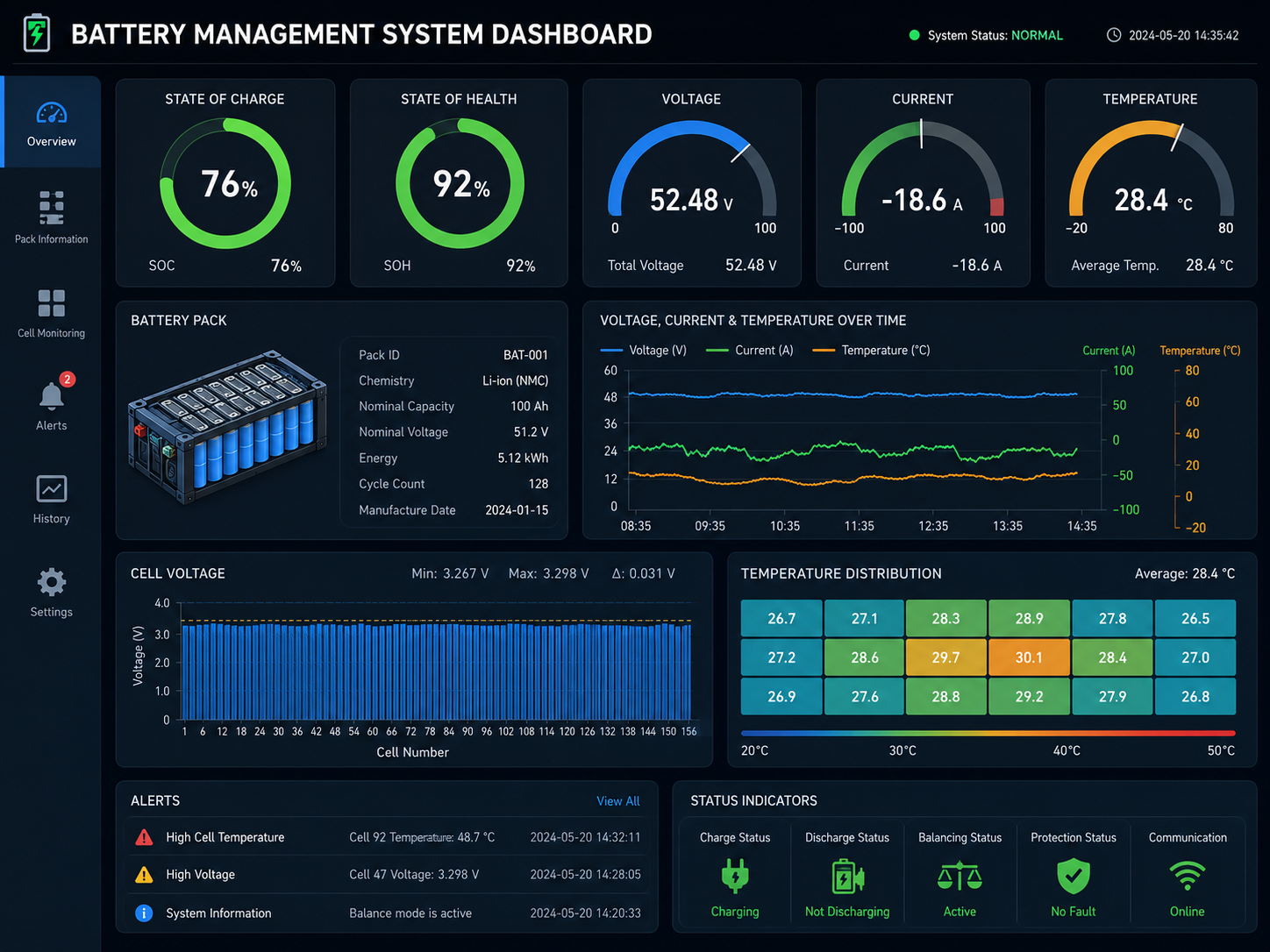
A good BMS monitors voltage, current, temperature, state of charge, and protection limits. To understand how the cell and BMS work together, see [How Does a Lithium Battery Work?].
[Soft CTA 1] Need low-maintenance battery options? Explore LiFePO4 battery products designed for solar storage, RV power, marine systems, home backup, and commercial energy storage applications.
________________________________________________________________
Lithium Battery Charging Tips
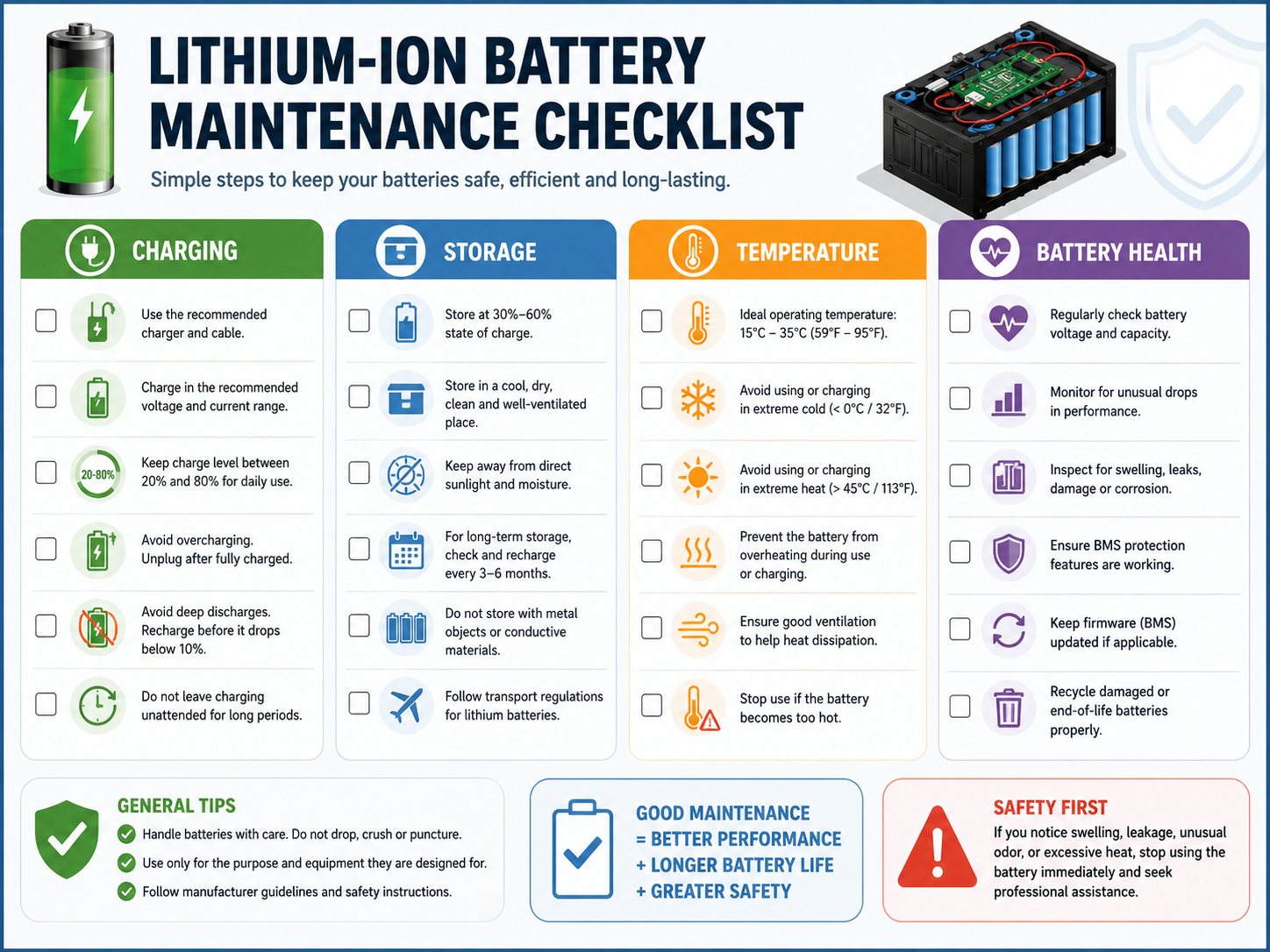
Charging is one of the most important parts of lithium battery maintenance. The charger or inverter must match the battery chemistry, voltage range, and current rating. A charger designed for lead-acid batteries may not be suitable for LiFePO4 unless it has a lithium-compatible profile.
Practical lithium battery charging tips:
Use a charger approved for the battery chemistry.
Follow the voltage and current limits in the datasheet.
Avoid charging below the manufacturer’s low-temperature limit.
Avoid leaving batteries connected to an incompatible charger.
Do not bypass BMS protection.
Check inverter and solar charge controller settings before commissioning.
Use proper cable sizing to prevent voltage drop and heat.
Confirm parallel or series wiring rules before expanding a battery bank.
LiFePO4 batteries often support faster charging than lead-acid batteries, but faster does not mean unlimited. Staying within the recommended charge current helps protect long-term battery health.
________________________________________________________________
Depth of Discharge and Battery Life
Depth of Discharge, or DoD, describes how much battery capacity is used before recharging. If a 100Ah battery uses 80Ah, the DoD is 80%.
Lithium batteries usually tolerate deeper discharge better than lead-acid batteries, but repeated extreme discharge can still reduce battery cycle life. For long-term battery health, users should avoid draining the battery to the lowest limit unless the application requires it.
Usage Habit |
Effect on Battery Life |
Frequent shallow or moderate cycling |
Usually better for longevity |
Repeated full-depth discharge |
More stressful over time |
Leaving battery fully depleted |
Can create recovery or protection issues |
Correct DoD planning |
Improves usable life and system reliability |
For cycle-life education, see [How Many Cycles Can a LiFePO4 Battery Provide?].
________________________________________________________________
Temperature and Lithium Battery Maintenance
Temperature has a major impact on lithium battery lifespan and safety. High heat accelerates chemical aging. Low temperature reduces available capacity and may restrict charging. Many lithium batteries should not be charged below freezing unless they include low-temperature charging protection or heating.
Best practices:
Install batteries away from direct heat sources.
Avoid storing portable power stations inside hot vehicles for long periods.
Use shaded, ventilated, or temperature-controlled locations when possible.
Follow the battery’s charging temperature range.
Check temperature alarms in smart battery systems.
Consider enclosure design for outdoor, telecom, marine, or off-grid sites.
Temperature limits vary by model, so the datasheet and installation manual should always be the final authority.
________________________________________________________________
How to Store Lithium Batteries Properly
Lithium battery storage is important when batteries are not used for weeks or months. Poor storage can reduce battery health even without cycling.
General storage guidance:
Storage Factor |
Recommended Practice |
State of charge |
Store at partial charge unless the manufacturer says otherwise |
Environment |
Cool, dry, and away from direct sunlight |
Long-term idle time |
Check battery periodically |
0% storage |
Avoid leaving fully depleted |
High-temperature storage |
Avoid because heat accelerates aging |
Connected loads |
Disconnect unnecessary parasitic loads |
For portable power station maintenance, recharge or check the unit periodically during storage. For commercial battery systems, use monitoring data to track state of charge, alarms, and temperature trends.
________________________________________________________________
LiFePO4 Battery Maintenance Tips
LiFePO4 batteries are popular for energy storage because they offer long cycle life, stable chemistry, low maintenance, and good deep-cycle performance. They are widely used in solar storage, home backup, RV, marine, telecom, and portable power systems.
Key LiFePO4 battery maintenance tips:
Use LiFePO4-compatible charging settings.
Avoid charging below the specified low-temperature limit.
Keep the battery within the recommended current range.
Do not mix old and new batteries without manufacturer approval.
Check BMS communication in smart systems.
Keep terminals tight and protected from moisture.
Store at an appropriate state of charge during long idle periods.
For chemistry-specific background, see [What Is LiFePO4 Battery?], [Types of Lithium Batteries Explained], and [Difference Between Lithium-Ion and LiFePO4].
________________________________________________________________
Lithium Battery Maintenance for Different Applications
Different applications create different maintenance priorities.
Solar energy storage systems
Solar batteries may cycle daily. Check inverter settings, solar charge controller profiles, cable connections, BMS data, ventilation, and operating temperature. For solar system planning, see [Best Lithium Battery for Solar Storage].
Home backup systems
Home backup batteries may stay idle for long periods or cycle daily for solar self-consumption. Test backup operation periodically, confirm essential-load settings, and review system alerts. See [Home Energy Storage Battery Guide].
Portable power stations
Portable power stations should be stored away from heat and checked periodically. Avoid long-term storage at 0%, and use approved chargers and solar inputs. See [Portable Power Station].
RV and marine batteries
RV and marine systems face vibration, moisture, mixed charging sources, and seasonal storage. Secure mounting, corrosion-resistant connections, charger compatibility, and winter storage planning are especially important.
Commercial and industrial energy storage
C&I systems require monitoring, scheduled inspections, thermal management, firmware review, communication checks, and documented maintenance procedures. For fleets or distributors, maintenance logs help reduce warranty disputes and support after-sales service.
[Soft CTA 2] Building storage systems for real-world use? Explore solar energy storage batteries and home energy storage systems designed for stable performance, smart monitoring, and long service life.
________________________________________________________________
Common Lithium Battery Maintenance Mistakes
Avoiding mistakes is often more important than performing complex maintenance.
Mistake |
Why It Shortens Life or Increases Risk |
Using the wrong charger |
May apply incorrect voltage or charge profile |
Frequent over-discharge |
Increases cycle stress |
High-temperature storage |
Accelerates aging |
Ignoring BMS warnings |
Allows small issues to become failures |
Loose connections |
Causes heat, voltage drop, and unstable performance |
Mixing mismatched batteries |
Can create imbalance and uneven aging |
Poor ventilation |
Traps heat around the battery system |
Ignoring installation manual |
Can void warranty or reduce safety margin |
For safety-focused guidance, see [Are Lithium Batteries Safe?].
________________________________________________________________
Lithium Battery Maintenance Checklist
Use this checklist as a practical starting point. Always adjust it based on the manufacturer’s manual and application environment.
Frequency |
Maintenance Tasks |
Monthly |
Check state of charge, review BMS alerts, inspect visible cables, confirm ventilation is not blocked |
Seasonal |
Check terminal tightness, clean dust, inspect enclosure, test backup function, review charger settings |
Before storage |
Charge to recommended storage level, disconnect unnecessary loads, store cool and dry |
During long storage |
Check voltage or SOC periodically, recharge if needed, inspect for physical damage |
Before heavy use |
Confirm charger compatibility, inspect cables, verify load rating, check system alarms |
This checklist is especially useful for distributors, installers, and fleet operators who manage multiple battery systems across different locations.
________________________________________________________________
When Should You Inspect or Replace a Lithium Battery?
Lithium batteries usually show warning signs before they become unusable. Inspection is needed when performance changes, alarms appear, or the battery has been exposed to abnormal conditions.
Common signs include:
Runtime becomes noticeably shorter.
BMS faults repeat frequently.
Battery overheats during normal use.
Swelling, odor, leakage, or physical deformation appears.
The battery cannot support normal loads.
Voltage imbalance appears in monitored systems.
Charging finishes unusually fast because capacity has faded.
The battery has been dropped, flooded, or physically damaged.
Do not continue using a battery that shows swelling, abnormal heat, smell, or serious physical damage. Consult the manufacturer or a qualified technician.
________________________________________________________________
Frequently Asked Questions
Do lithium batteries need maintenance?
Yes. Lithium batteries require less routine maintenance than lead-acid batteries, but they still need correct charging, temperature control, proper storage, clean connections, and BMS monitoring.
How often should I maintain a lithium battery?
For most applications, a monthly visual and system check is useful. Seasonal checks are recommended for RV, marine, solar, and backup systems, especially before storage or heavy use.
Should lithium batteries be fully charged before storage?
Not always. Many manufacturers recommend partial-charge storage in a cool, dry place. Always follow the battery manual because ideal storage state of charge varies by model.
Can I use a lead-acid charger for a lithium battery?
Only if the charger has a compatible lithium or LiFePO4 profile approved for the battery. Incorrect charging settings can reduce lifespan or trigger BMS protection.
How do I extend lithium battery life?
Use the correct charger, avoid excessive heat, avoid unnecessary deep discharge, store properly, keep connections tight, monitor BMS data, and follow manufacturer specifications.
________________________________________________________________
Conclusion
How to Maintain a Lithium Battery comes down to controlling stress. Lithium batteries are low-maintenance compared with lead-acid batteries, but their lifespan and safety still depend on correct charging, reasonable depth of discharge, temperature control, proper storage, clean connections, and reliable BMS protection.
For solar storage, home backup, RV, marine, portable power, and commercial energy storage, the best maintenance strategy is simple: follow the datasheet, monitor battery health, avoid extreme conditions, and inspect the system before problems become failures. With proper lithium battery maintenance, users can improve reliability, protect battery cycle life, and reduce total cost of ownership.
[Soft CTA 3] Ready to choose a reliable lithium battery system? Compare LiFePO4 battery products, solar energy storage batteries, home energy storage systems, and portable power station battery solutions for your application.
 Hot News
2026-08-20
2026-08-16
2026-08-12
2026-08-03
2026-07-30
2026-07-26

Pittar Power is a professional manufacturer specializing inenergy storage solutions.
Room 302, Building 1, No. 10, Huangjin First Road, Nancheng District, Dongguan City, Guangdong Province, China
Copyright © Shenzhen Pittar Power Co., Ltd. All Rights Reserved Privacy Policy
 EN
EN