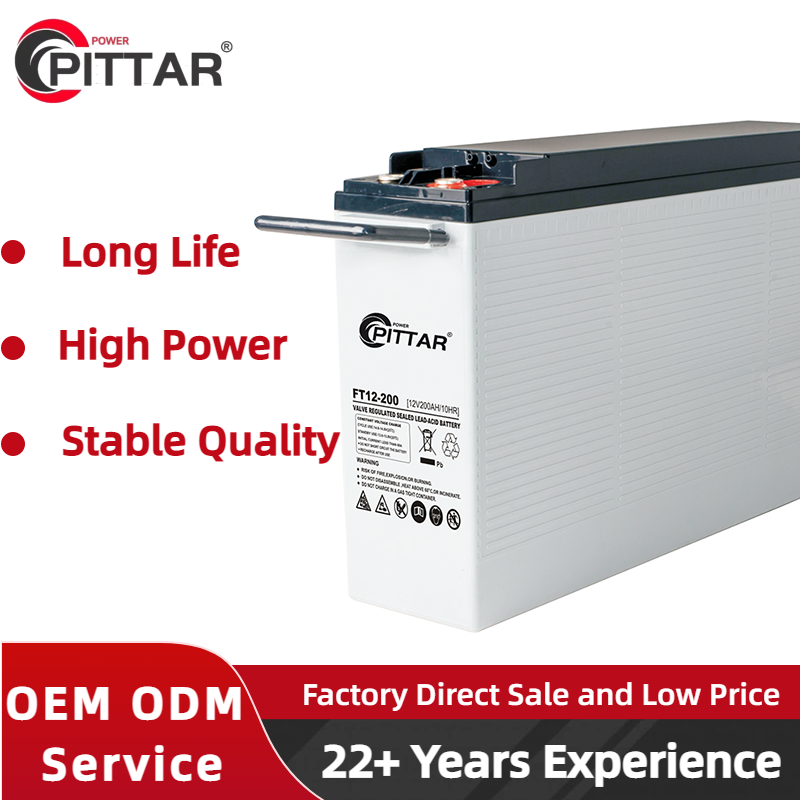
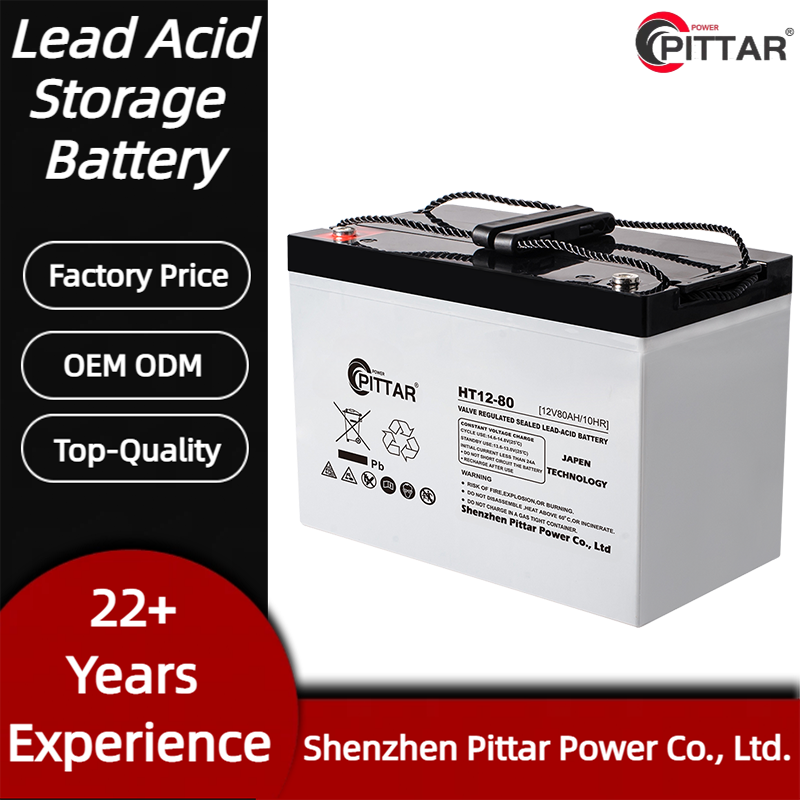
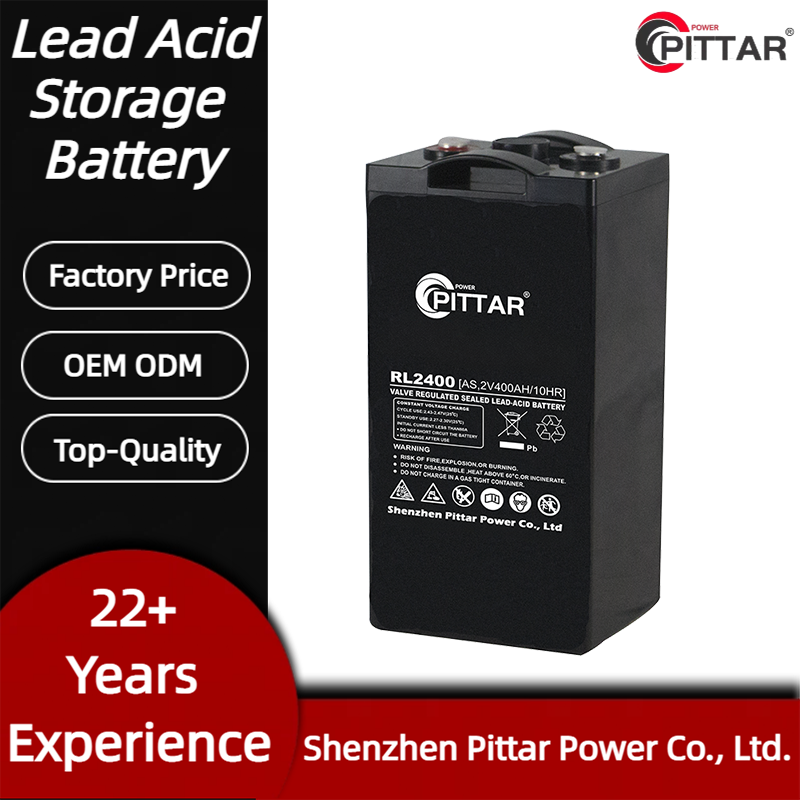
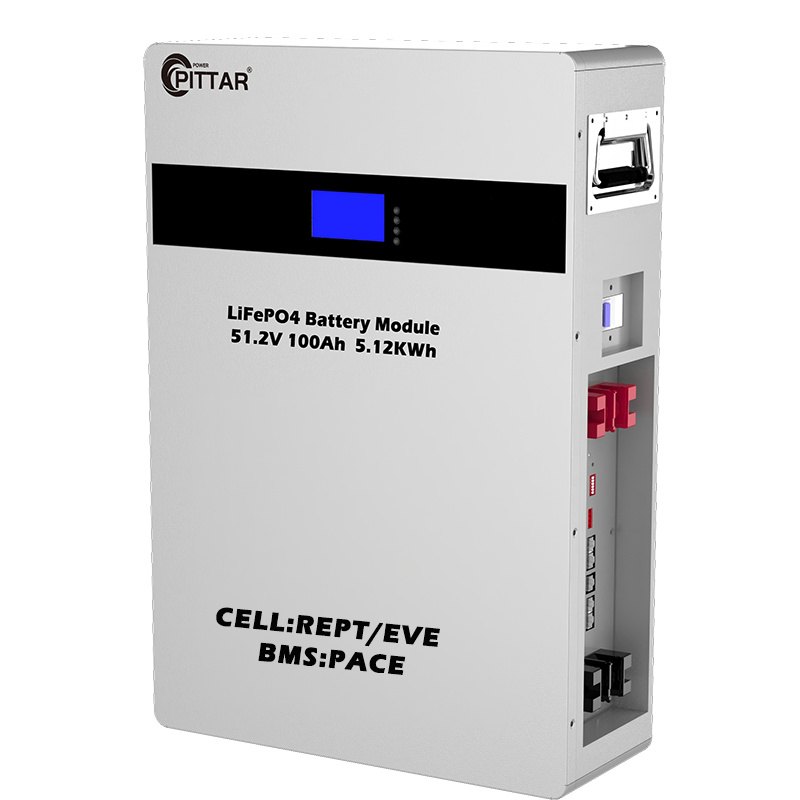
The LiFePO4 vs Lead Acid Battery comparison is one of the most important decisions for buyers choosing batteries for solar energy storage, home backup power, RV systems, marine power, portable power stations, and industrial equipment. Lead acid batteries have been used for more than a century and remain familiar, low-cost, and widely available. LiFePO4 batteries, however, offer longer cycle life, lighter weight, faster charging, higher usable capacity, and lower maintenance in many deep-cycle applications.
For B2B battery buyers and energy storage distributors, the best choice is not always the battery with the lowest upfront price. The better question is which battery delivers the best performance, reliability, and total cost of ownership over the expected service life.
This article provides a balanced LiFePO4 Battery vs Lead Acid Battery comparison and supports the lithium battery pillar page [What Is a Lithium Battery?]. For chemistry background, see [What Is LiFePO4 Battery?] and [Types of Lithium Batteries Explained].
____________________________________________________________________
Overview of LiFePO4 Batteries
LiFePO4 batteries, also known as lithium iron phosphate batteries or LFP batteries, are rechargeable lithium batteries designed for long cycle life, stable deep-cycle performance, and strong safety characteristics.
They are widely used in:
Solar energy storage systems.
Home backup batteries.
RV and marine power systems.
Portable power stations.
Telecom backup systems.
Industrial equipment and UPS applications.
Key LiFePO4 Advantages include low maintenance, high usable capacity, faster charging, lighter weight, and longer service life in frequent-cycling applications. LiFePO4 is not always the cheapest battery to purchase, but it often delivers stronger lifecycle value where batteries are used regularly.
For buyers comparing lithium chemistries, see [Difference Between Lithium-Ion and LiFePO4].
____________________________________________________________________
Overview of Lead Acid Batteries
Lead acid batteries are one of the oldest rechargeable battery technologies. Common types include flooded lead acid, AGM, and gel batteries. They are used in vehicles, UPS systems, backup power, off-grid systems, golf carts, forklifts, and low-cost energy storage applications.
Lead acid batteries remain popular because they are widely available and usually have a lower upfront price. They can work well in standby applications where cycling is limited and budget is the primary concern.
However, lead acid batteries have limitations in deep-cycle use. They are heavy, charge more slowly, require more maintenance depending on type, and typically have a lower recommended depth of discharge if long life is required.
____________________________________________________________________
Key Differences Between LiFePO4 and Lead Acid Batteries
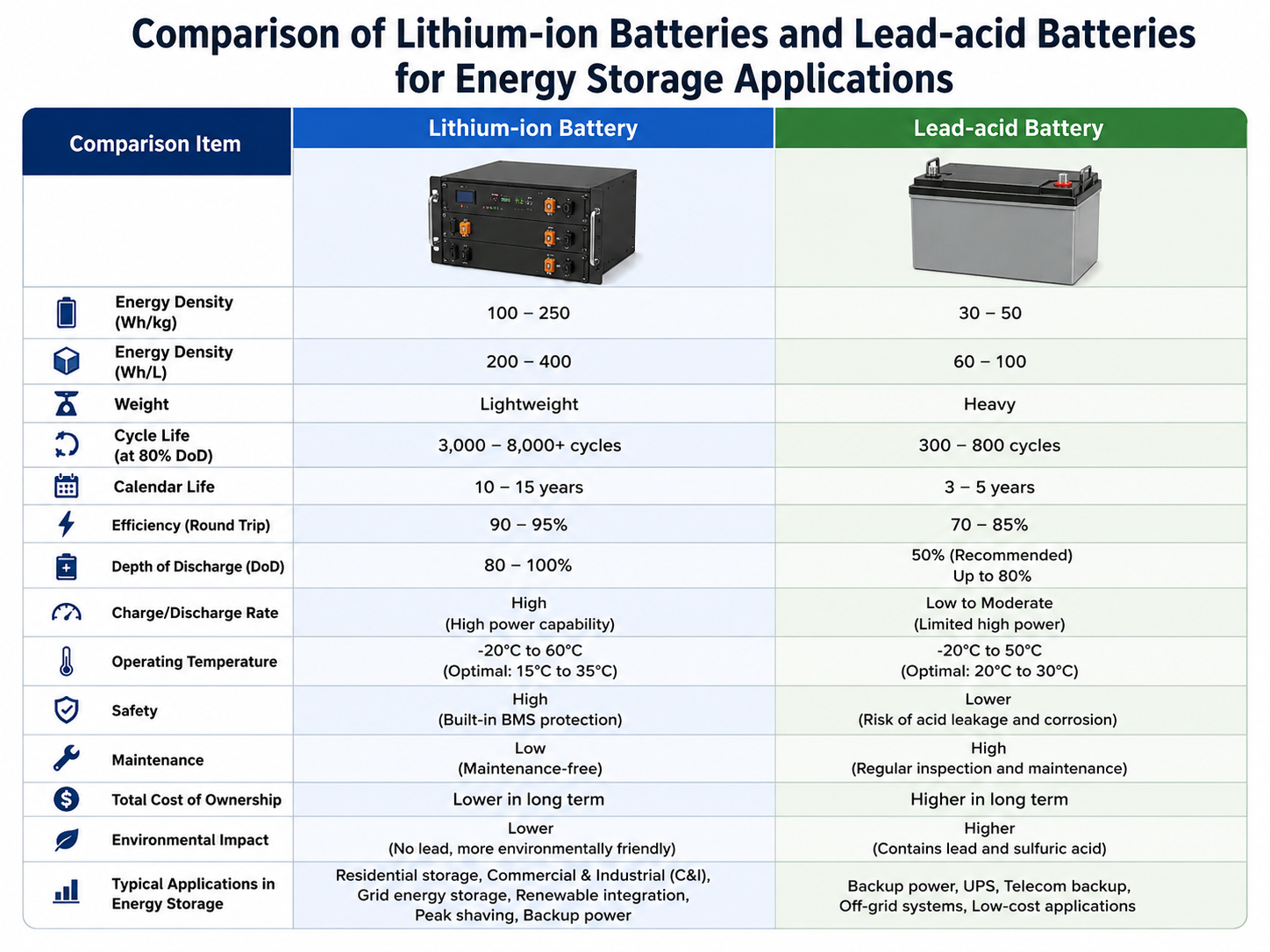
The main difference in the Lithium Battery vs Lead Acid comparison is how each technology handles deep cycling, charging, weight, maintenance, and usable capacity.
Factor |
LiFePO4 Battery |
Lead Acid Battery |
Chemistry |
Lithium iron phosphate |
Lead dioxide and sponge lead with sulfuric acid electrolyte |
Usable capacity |
Higher depth of discharge in many systems |
Lower recommended depth of discharge |
Cycle life |
Longer in deep-cycle applications |
Shorter under frequent deep discharge |
Weight |
Much lighter |
Heavier |
Charging speed |
Faster with compatible charger |
Slower |
Efficiency |
Higher round-trip efficiency |
Lower efficiency |
Maintenance |
Low maintenance |
Varies by flooded, AGM, or gel type |
Upfront cost |
Higher |
Lower |
Long-term value |
Strong in high-cycle use |
Strong in low-budget or standby use |
For a quick answer optimized for featured snippets: LiFePO4 batteries are usually better for deep-cycle solar storage, RV, marine, portable power, and home backup applications, while lead acid batteries may still be suitable when upfront cost is the main priority and cycling is limited.
____________________________________________________________________
Energy Density Comparison
Energy density describes how much energy a battery stores relative to its size or weight. LiFePO4 batteries generally provide much higher practical energy density than lead acid batteries.
This difference matters when space is limited or weight affects installation. In an RV, a lighter LiFePO4 battery bank can reduce payload burden. In a portable power station, higher energy density supports a more compact design. In a home storage system, a wall-mounted or rack-mounted lithium battery can deliver more usable capacity in less space.
Lead acid batteries are physically larger and heavier for the same usable energy. This makes them less attractive for mobile or space-constrained applications.
____________________________________________________________________
Weight Comparison
Weight is one of the most visible differences in a Deep Cycle Battery Comparison. Lead acid batteries are heavy because of their lead plates and liquid or absorbed electrolyte structure. LiFePO4 batteries are typically much lighter for comparable usable capacity.
Application |
Why Weight Matters |
Better Fit |
RV systems |
Less weight improves payload and efficiency |
LiFePO4 |
Marine systems |
Lower weight improves handling and balance |
LiFePO4 |
Portable power stations |
Product must be easier to carry |
LiFePO4 |
Stationary backup |
Weight matters less if floor-mounted |
Depends |
Low-cost standby |
Budget may matter more than weight |
Lead acid |
For portable and mobile equipment buyers, lower weight can improve product usability and reduce logistics complexity
____________________________________________________________________
Cycle Life Comparison
Cycle life is a major reason buyers upgrade from lead acid to LiFePO4. A cycle refers to one discharge and recharge process. In daily-use systems, cycle life has a direct impact on replacement frequency and total cost.
LiFePO4 batteries are designed for deep-cycle use and commonly deliver far more cycles than lead acid batteries under comparable operating conditions. Lead acid batteries can last reasonably well in standby applications, but frequent deep discharge shortens their life.
Important cycle-life variables include:
Depth of discharge.
Operating temperature.
Charging profile.
Discharge current.
Cell or plate quality.
Battery management or charging control.
For related lifecycle education, link to [How Long Does a Lithium Battery Last?].
____________________________________________________________________
Charging Speed Comparison
LiFePO4 batteries usually charge faster than lead acid batteries when paired with a compatible charger or inverter. This is important for solar energy storage, RV systems, marine charging, and portable power stations.
Lead acid batteries have more limited charge acceptance, especially as they approach full charge. The absorption stage can take time, and incomplete charging can contribute to sulfation over time.
LiFePO4 batteries can often accept higher charge current and maintain efficient charging behavior. However, correct settings are essential. The charger must match LiFePO4 voltage requirements and safety limits.
____________________________________________________________________
Efficiency Comparison
Efficiency affects how much stored energy can be used after charging. LiFePO4 batteries typically provide higher round-trip efficiency than lead acid batteries, meaning less energy is lost as heat during charge and discharge.
For solar systems, higher efficiency means more harvested solar energy becomes usable energy. For home backup, it means longer runtime from the same nominal capacity. For portable power stations, it helps improve real-world customer experience.
Performance Metric |
LiFePO4 Battery |
Lead Acid Battery |
Round-trip efficiency |
Higher |
Lower |
Voltage stability |
Stronger |
Drops more under load |
Deep discharge performance |
Better |
More limited |
Solar energy utilization |
Better in daily cycling |
Lower in frequent cycling |
____________________________________________________________________
Maintenance Requirements
LiFePO4 batteries are low-maintenance. They do not require watering, equalization charging, or acid-level checks. A proper BMS protects against overcharge, over-discharge, overcurrent, and temperature extremes.
Lead acid maintenance depends on type. Flooded lead acid batteries may require watering and ventilation. AGM and gel batteries reduce maintenance but still have sensitivity to charging conditions and depth of discharge.
For commercial buyers, reduced maintenance can lower labor cost, service calls, and downtime. This is one reason LiFePO4 is attractive for distributed energy storage, telecom backup, RV rental fleets, and industrial equipment.
____________________________________________________________________
Safety Comparison
Both battery types can be safe when properly designed, installed, charged, and maintained. Safety depends on chemistry, system design, charger compatibility, installation environment, and user behavior.
Lead acid batteries can release hydrogen gas during charging, especially flooded types, so ventilation may be required. Acid leakage and corrosion are also concerns in some applications.
LiFePO4 batteries are known for strong thermal stability compared with many lithium chemistries. A quality LiFePO4 battery includes a BMS for electrical and temperature protection. Still, buyers should verify certifications, enclosure quality, inverter compatibility, and installation guidance.
For a broader safety article, link to [Are Lithium Batteries Safe?].
____________________________________________________________________
Cost Comparison
Lead acid batteries usually cost less upfront. This is why they remain common in budget-sensitive applications. However, upfront price does not always represent true cost.
LiFePO4 batteries cost more initially but can deliver better lifetime value because they provide more usable capacity, longer cycle life, faster charging, lower maintenance, and fewer replacements.
Cost Factor |
LiFePO4 Battery |
Lead Acid Battery |
Initial purchase price |
Higher |
Lower |
Usable capacity per rated kWh |
Higher |
Lower |
Replacement frequency |
Lower in deep-cycle use |
Higher in frequent cycling |
Maintenance cost |
Low |
Medium to high depending on type |
Downtime risk |
Lower when properly specified |
Higher under deep cycling |
Long-term value |
Strong in active use |
Strong in low-cycle budget use |
For B2B projects, cost analysis should include delivered cost, installation cost, service cost, warranty risk, and replacement planning.
____________________________________________________________________
Total Cost of Ownership Analysis
Total cost of ownership, or TCO, is where LiFePO4 often becomes more attractive. A battery with a lower purchase price may become more expensive if it needs replacement more often or provides less usable capacity.
A practical TCO model should include:
Battery purchase price.
Usable depth of discharge.
Expected cycle life.
Charge/discharge efficiency.5. Installation and replacement labor.
Maintenance requirements.
Downtime cost.
Warranty coverage.
Disposal or recycling costs.
Example scenario:
Item |
LiFePO4 Battery |
Lead Acid Battery |
Upfront price |
Higher |
Lower |
Usable capacity |
Higher |
Lower |
Expected replacements |
Fewer |
More frequent |
Maintenance |
Minimal |
Higher depending on type |
Best TCO outcome |
Daily cycling, solar, RV, backup |
Low-cycle standby, tight budget |
For solar distributors or fleet buyers, the best quote is not always the cheapest quote. It is the one that delivers the required energy reliably at the lowest lifetime cost.
Soft CTA: Explore LiFePO4 battery products
If you are evaluating battery upgrades for solar, RV, marine, or industrial applications, explore our LiFePO4 battery products to compare capacity, voltage platforms, BMS protection, and lifecycle value.
____________________________________________________________________
Which Battery Is Better for Solar Energy Storage?
For solar energy storage, LiFePO4 is usually the better fit. Solar batteries often charge during the day and discharge at night, making daily cycling, efficiency, and long cycle life critical.
A Best Battery for Solar Storage decision should consider:
Daily cycle requirements.
Inverter compatibility.
Usable capacity.
Charging speed.
Temperature range.
Warranty and service support.
System expansion needs.
Lead acid may still work in small off-grid systems where budget is limited and cycling is moderate. But for professional solar storage, LiFePO4 often provides stronger long-term value. Link this section to [Best Lithium Battery for Solar Storage]
Soft CTA: Explore solar storage battery solutions
For solar installers and distributors, our solar storage battery solutions are designed for deep-cycle operation, inverter communication, scalable capacity, and reliable long-term performance.
____________________________________________________________________
Which Battery Is Better for Home Backup Power?
For home backup power, LiFePO4 is often preferred because it supports long cycle life, stable performance, low maintenance, and strong safety characteristics. A LiFePO4 for Home Backup system can store solar or grid energy and provide power during outages.
Home backup buyers should consider:
Essential load requirements.
Backup duration.
Indoor or outdoor installation.
Hybrid inverter compatibility.
Safety certifications.
Warranty and monitoring.
Lead acid batteries may be acceptable for simple standby backup, but they are less attractive for systems that cycle frequently or need compact installation. For deeper system planning, link to [Home Energy Storage Battery Guide].
Soft CTA: Explore home energy storage and portable power station batteries
If you are designing residential backup systems or portable power products, explore our home energy storage batteries and portable power station batteries for scalable capacity, safe operation, and long-term backup reliability.
____________________________________________________________________
Which Battery Is Better for RV and Marine Applications?
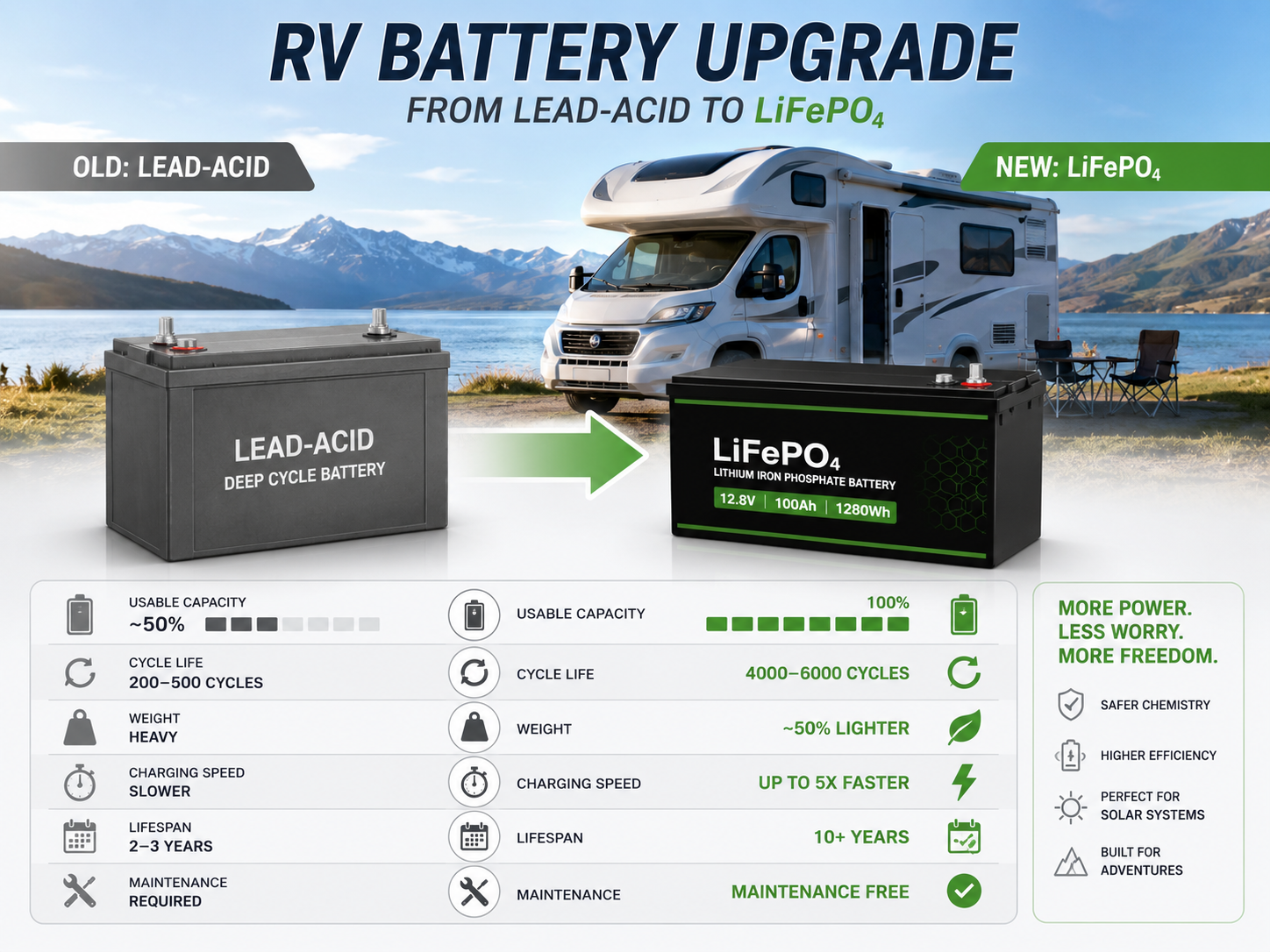
For RV and marine applications, LiFePO4 is usually the better fit because weight, usable capacity, fast charging, and deep-cycle performance matter every day.
A LiFePO4 for RV system can support lighting, refrigerators, water pumps, communication devices, navigation electronics, and off-grid appliances. Marine users also benefit from lower weight and reduced maintenance.
Lead acid batteries may be used when upfront budget is limited, but the heavier weight and lower usable capacity can reduce convenience and performance.
____________________________________________________________________
Which Battery Is Better for Portable Power Stations?
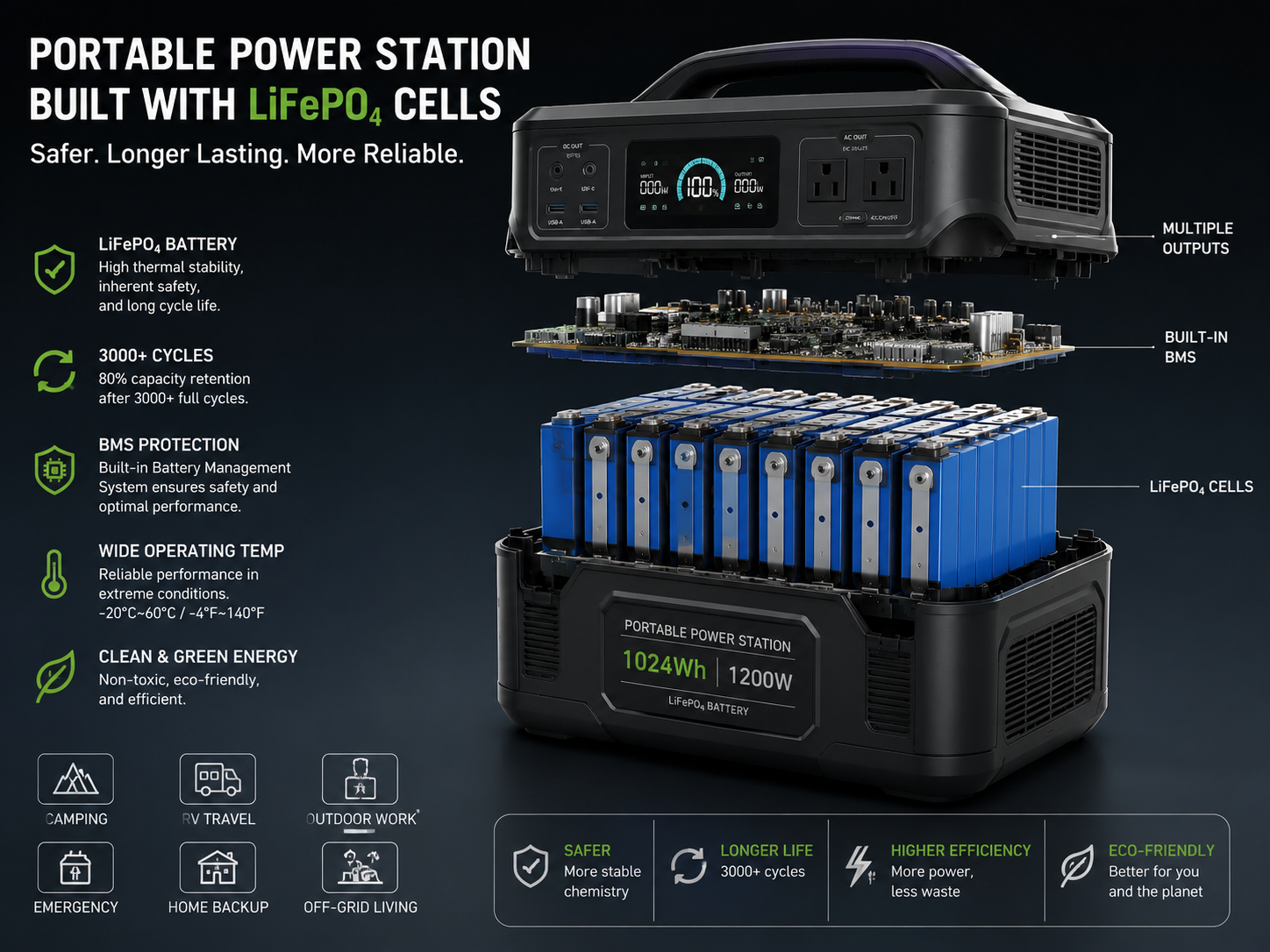
Portable power stations need compact size, low weight, safety, fast recharging, and long cycle life. LiFePO4 has become increasingly popular for larger portable power station models because it supports frequent use and longer service life.
For lightweight compact models, other lithium chemistries may still be used. However, lead acid is usually less suitable for modern portable power station products because it is heavy and offers lower practical energy density.
For product category support, link to [Portable Power Station].
____________________________________________________________________
Is Upgrading from Lead Acid to LiFePO4 Worth It?
Upgrading from lead acid to LiFePO4 is often worth it when the system cycles frequently, weight matters, space is limited, or long-term reliability is important.
Upgrade is usually attractive for:
Solar storage systems with daily cycling.
RV and marine house battery banks.
Portable power products.
Home backup systems with solar integration.
Industrial systems where downtime is expensive.
Lead acid may still be reasonable when:
The application is low-cycle standby.
Upfront budget is the main constraint.
Weight and maintenance are not major concerns.
Existing charging equipment is designed only for lead acid.
Before upgrading, confirm charger compatibility, voltage platform, BMS protection, cable sizing, fusing, enclosure space, and installation requirements.
____________________________________________________________________
Frequently Asked Questions
Is LiFePO4 better than lead acid?
LiFePO4 is usually better for deep-cycle applications because it provides longer cycle life, lighter weight, faster charging, higher usable capacity, and lower maintenance. Lead acid may still be suitable for low-budget or low-cycle standby use.
What is the main difference between LiFePO4 and lead acid batteries?
The main difference is chemistry and usable performance. LiFePO4 uses lithium iron phosphate chemistry and is optimized for deep-cycle use, while lead acid uses lead plates and sulfuric acid electrolyte and is heavier with lower practical usable capacity.
Is LiFePO4 worth the higher upfront cost?
LiFePO4 can be worth the higher upfront cost when batteries are used frequently. Longer cycle life, more usable energy, lower maintenance, and fewer replacements can improve total cost of ownership.
Which battery is better for solar storage?
LiFePO4 is usually better for solar storage because it supports daily cycling, efficient charging, high usable capacity, and long service life. Lead acid may work in smaller low-budget systems with moderate cycling.
Can I replace lead acid with LiFePO4?
In many systems, yes, but you must confirm voltage compatibility, charger settings, BMS limits, wiring, fusing, and equipment requirements. Do not assume a drop-in replacement is correct without checking the manufacturer’s guidance.
Which battery is better for RV use?
LiFePO4 is usually better for RV use because it is lighter, charges faster, provides more usable capacity, and lasts longer in deep-cycle applications.
Are LiFePO4 batteries safe?
LiFePO4 batteries are known for strong thermal stability and are generally considered one of the safer lithium chemistries. Safety still depends on cell quality, BMS design, installation, charger compatibility, and correct use.
_____________________________________________________________________
Conclusion
The LiFePO4 vs Lead Acid Battery decision depends on application, budget, cycling frequency, weight limits, maintenance expectations, and lifetime cost. Lead acid batteries remain useful where upfront cost is the main priority and cycling is limited. However, for solar energy storage, home backup, RV and marine systems, portable power stations, and many industrial applications, LiFePO4 often delivers stronger long-term value.
LiFePO4 batteries provide higher usable capacity, longer cycle life, faster charging, lower weight, better efficiency, and reduced maintenance. For buyers evaluating a Lithium Battery vs Lead Acid upgrade, the most important metric is not just price per battery. It is cost per usable kilowatt-hour over the full service life.
 Hot News
2026-08-20
2026-08-16
2026-08-12
2026-08-03
2026-07-30
2026-07-26

Pittar Power is a professional manufacturer specializing inenergy storage solutions.
Room 302, Building 1, No. 10, Huangjin First Road, Nancheng District, Dongguan City, Guangdong Province, China
Copyright © Shenzhen Pittar Power Co., Ltd. All Rights Reserved Privacy Policy
 EN
EN