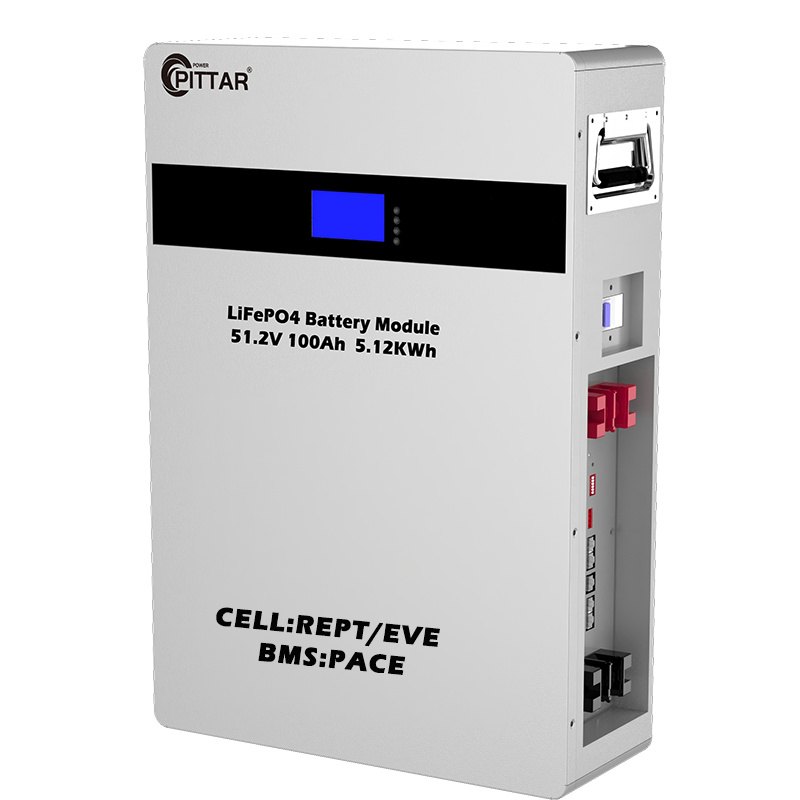
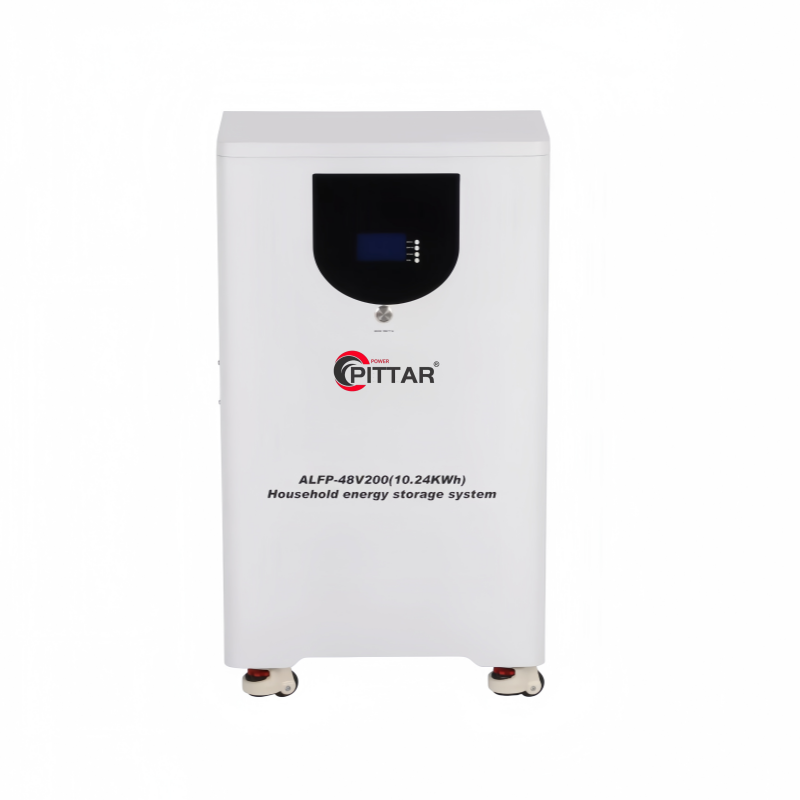
The Lithium Battery vs AGM Battery decision is one of the most common comparisons for solar energy storage, RV power, marine systems, home backup, portable power stations, and industrial battery upgrades. AGM batteries are familiar, sealed, and widely available. Lithium batteries, especially LiFePO4 batteries, offer longer cycle life, lighter weight, faster charging, deeper usable capacity, and better performance in frequent deep-cycle applications.
For B2B battery buyers, solar energy distributors, RV and marine users, portable power station brands, and energy storage system integrators, the best choice depends on application, budget, cycling frequency, weight limits, charging equipment, and total cost of ownership.
This article provides a balanced AGM vs Lithium Battery comparison while supporting the lithium battery pillar guide [What Is a Lithium Battery?]. For chemistry background, see [What Is LiFePO4 Battery?] and [Difference Between Lithium-Ion and LiFePO4].
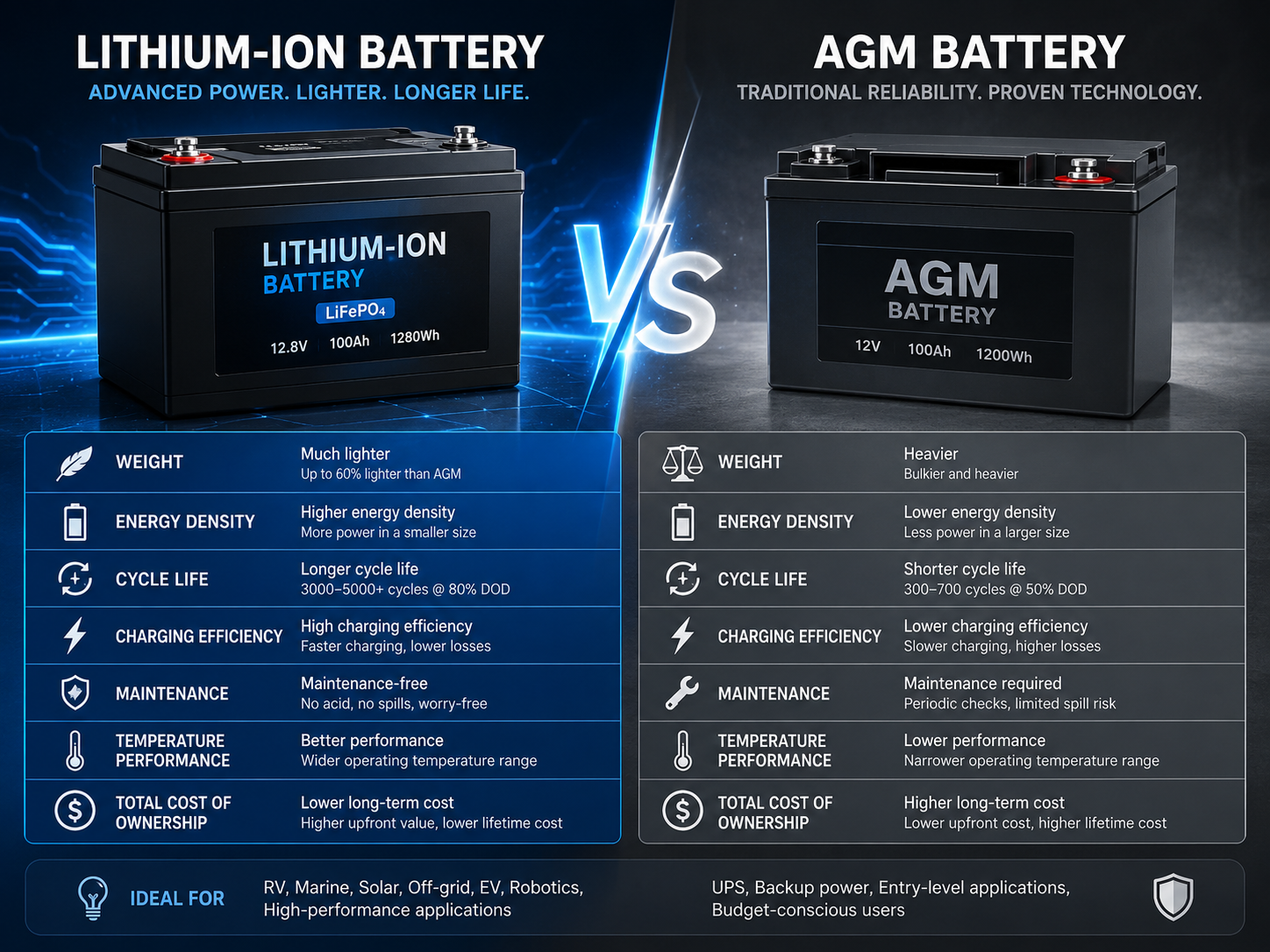
A lithium battery is a rechargeable battery that uses lithium-based chemistry to store and release electrical energy. In energy storage, RV, marine, and portable power applications, many lithium upgrades use LiFePO4 chemistry because it offers strong safety, long cycle life, and stable deep-cycle performance.
Lithium batteries are used in solar storage systems, home backup batteries, portable power stations, RV power systems, marine battery banks, telecom backup, and industrial equipment. They are popular because they provide more usable energy from a smaller and lighter battery pack.
For broader battery chemistry education, link to [Types of Lithium Batteries Explained].
_______________________________________________________________________
What Is an AGM Battery?
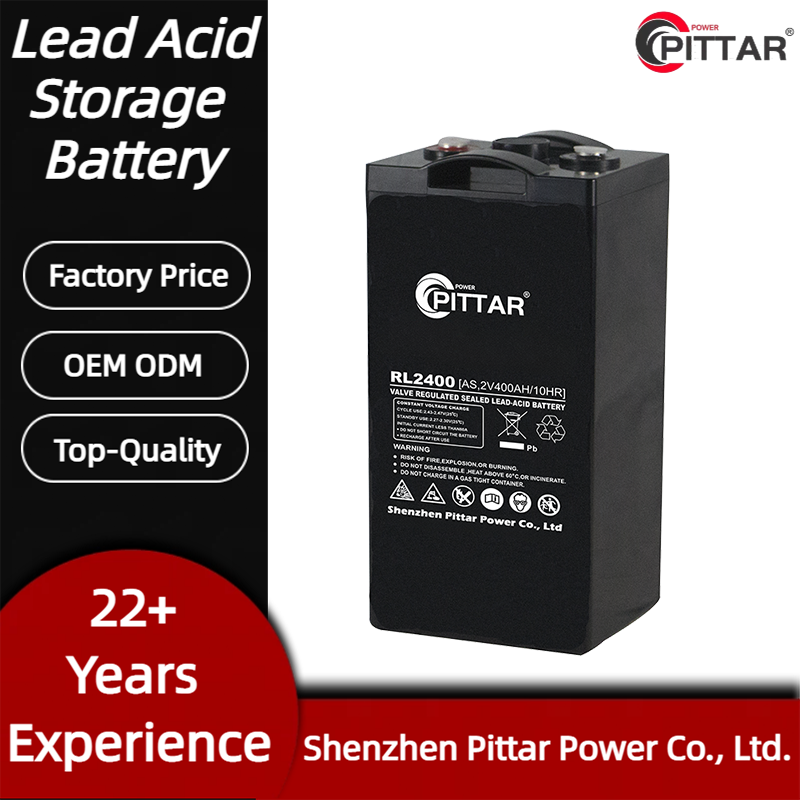
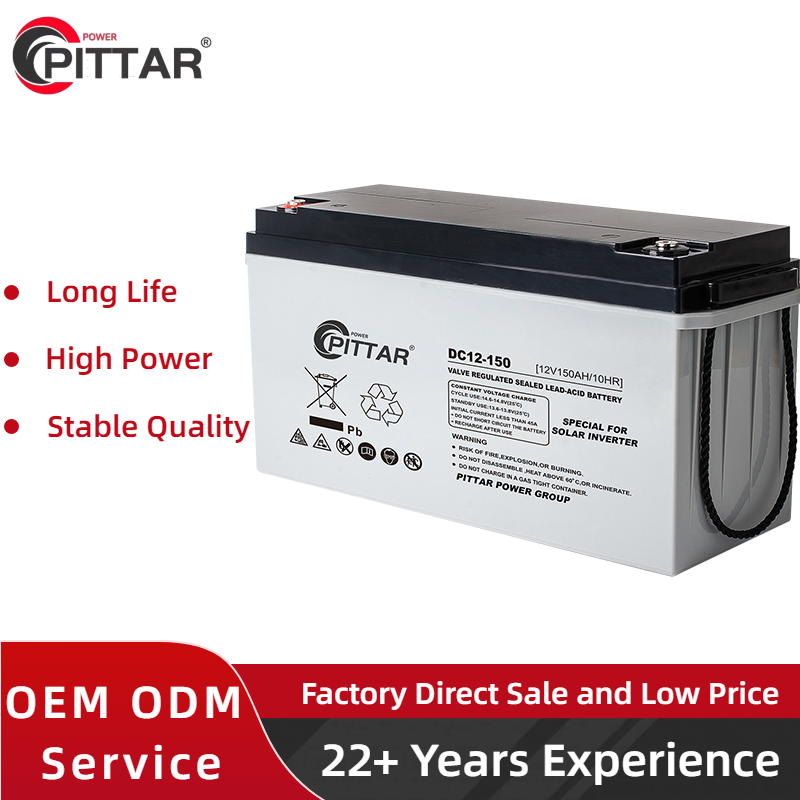
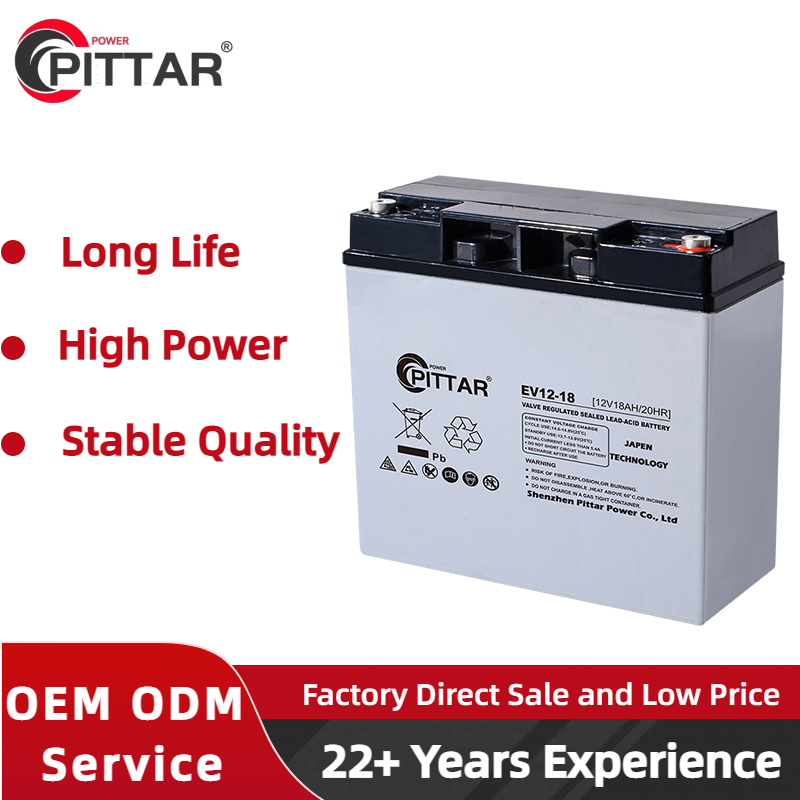
An AGM battery, or Absorbent Glass Mat battery, is a type of sealed lead acid battery. Instead of free-flowing liquid electrolyte, AGM batteries use fiberglass mats to absorb the electrolyte between the battery plates.
AGM batteries are commonly used in automotive starting, UPS backup, RV systems, marine power, emergency lighting, and lower-cost deep-cycle applications. They are sealed, spill-resistant, and require less maintenance than flooded lead acid batteries.
However, AGM is still a lead acid technology. It is heavier than lithium, has lower usable depth of discharge, charges more
slowly, and usually has a shorter cycle life in frequent deep-cycle use.
_______________________________________________________________________
Key Differences Between Lithium and AGM Batteries
The main difference in a Lithium Battery Compared to AGM is performance under repeated cycling. Lithium batteries are usually better for applications where batteries are charged and discharged frequently. AGM batteries can still be useful for lower-cost standby power or moderate-duty systems.
Factor |
Lithium Battery / LiFePO4 |
AGM Battery |
Battery family |
Lithium-ion chemistry |
Sealed lead acid |
Usable capacity |
Higher practical depth of discharge |
Lower recommended depth of discharge |
Cycle life |
Longer in deep-cycle use |
Shorter under frequent deep cycling |
Weight |
Much lighter |
Heavier |
Charging speed |
Faster with compatible charger |
Slower absorption stage |
Efficiency |
Higher round-trip efficiency |
Lower efficiency |
Maintenance |
Low maintenance |
Low maintenance, but lead acid limitations remain |
Upfront price |
Higher |
Lower |
Best fit |
Solar, RV, marine, portable power, home backup |
Budget backup, starting support, light cycling |
For buyers also comparing flooded lead acid or gel batteries, see [LiFePO4 vs Lead Acid Battery].
_______________________________________________________________________
Energy Density Comparison: Lithium Battery vs AGM Battery
Energy density measures how much energy a battery can store relative to its size or weight. Lithium batteries generally provide higher usable energy density than AGM batteries.
This matters in applications where space is limited. A portable power station must be compact. An RV battery compartment may have strict size limits. A marine battery bank must balance power with weight distribution. A wall-mounted home battery needs clean installation and high usable capacity.
AGM batteries are larger and heavier for the same usable energy. Even when rated capacity looks similar on paper, the practical usable capacity may differ because AGM batteries are typically not discharged as deeply if long service life is desired.
_______________________________________________________________________
Weight Comparison
Weight is one of the clearest differences in a Deep Cycle Battery Comparison. AGM batteries contain lead plates, which makes them heavy. Lithium batteries are much lighter for comparable usable energy
Application |
Why Weight Matters |
Better Fit |
RV power |
Payload and storage space are limited |
Lithium |
Marine systems |
Weight affects balance and handling |
Lithium |
Portable power stations |
Users need easier carrying |
Lithium |
Home backup |
Wall or rack installation benefits from lighter packs |
Lithium |
Low-cost stationary backup |
Weight may be less important |
AGM may work |
For RV and marine users, lower battery weight can improve installation flexibility and reduce strain on the vehicle or vessel.
_______________________________________________________________________
Cycle Life Comparison
Cycle life is one of the strongest reasons buyers consider AGM Battery Replacement with Lithium. AGM batteries can work well in standby applications, but frequent deep cycling shortens their service life.
Lithium batteries, especially LiFePO4, are designed for repeated deep-cycle use. They can usually provide more cycles under comparable conditions, making them more attractive for solar storage, RV living, marine house banks, portable power products, and home backup systems.Cycle life depends on:
Depth of discharge.
Charging voltage and current.
Operating temperature.
Battery quality.
BMS or charge controller settings.
Discharge rate.
For lifecycle education, link to [How Long Does a Lithium Battery Last?].
_______________________________________________________________________
Charging Speed Comparison
Lithium batteries usually charge faster than AGM batteries when paired with the correct charger or inverter. This is important for solar systems, RV alternator charging, marine charging, and portable power station products.
AGM batteries often require a longer absorption stage as they approach full charge. If they are not fully charged regularly, performance and lifespan can decline. Lithium batteries can often accept higher charging current and reach usable capacity faster.
Charging Factor |
Lithium Battery |
AGM Battery |
Charge acceptance |
Higher with compatible equipment |
Lower near full charge |
Solar recharge efficiency |
Strong |
More limited |
Time to usable capacity |
Faster |
Slower |
Charger requirements |
Lithium-compatible profile |
AGM-compatible lead acid profile |
Risk if wrong settings used |
Reduced life or protection trigger |
Reduced life, sulfation, overheating risk |
Correct charger settings are essential for both technologies.
_______________________________________________________________________
Depth of Discharge (DoD) Comparison
Depth of discharge, or DoD, describes how much of the battery’s capacity is used before recharging. This is one of the most important technical differences between lithium and AGM batteries.
Lithium batteries usually support deeper usable discharge without the same lifespan penalty. AGM batteries can be discharged deeply, but repeated deep discharge often reduces service life.
For buyers, this means nominal capacity can be misleading. A 100Ah AGM battery and a 100Ah lithium battery may not provide the same practical usable energy over time.
Featured-snippet answer: Lithium batteries usually provide more usable capacity than AGM batteries because they can operate at a deeper depth of discharge with better cycle life.
_______________________________________________________________________
Efficiency Comparison
Efficiency affects how much stored energy can be recovered after charging. Lithium batteries generally provide better round-trip efficiency than AGM batteries. Less energy is lost as heat, and voltage remains more stable under load.
Performance Metric |
Lithium Battery |
AGM Battery |
Round-trip efficiency |
Higher |
Lower |
Voltage stability |
Stronger under load |
Drops more under heavy load |
Deep-cycle performance |
Better |
More limited |
Solar utilization |
Better for daily cycling |
Lower in frequent cycling |
Runtime consistency |
More stable |
More affected by load and state of charge |
For solar and backup systems, higher efficiency can increase useful runtime and improve system economics.
_______________________________________________________________________
Maintenance Requirements
Both AGM and lithium batteries are lower maintenance than flooded lead acid batteries, but lithium batteries generally require less operational attention in deep-cycle use.
AGM batteries are sealed and do not require watering. However, they are still sensitive to charging conditions, temperature, depth of discharge, and long periods of partial state of charge.
Lithium batteries use a BMS to monitor and protect the pack. The BMS helps control overcharge, over-discharge, overcurrent, short circuit, and temperature-related risks.
For fleet operators, RV rental businesses, and distributed energy storage projects, reduced maintenance can lower labor cost and improve reliability.
_______________________________________________________________________
Safety Comparison
Both lithium and AGM batteries can be safe when designed, installed, charged, and used correctly. The safety profile is different for each technology.
AGM batteries are sealed and spill-resistant, but they are still lead acid batteries. They may vent gas under certain charging conditions and can be damaged by improper charging. They are heavy and contain lead and acid-based materials.
LiFePO4 lithium batteries are known for strong thermal stability compared with some other lithium chemistries. A quality lithium pack also includes BMS protection. Buyers should still verify cell quality, certifications, charger compatibility, enclosure design, and installation instructions.
For safety-focused cluster content, link to [Are Lithium Batteries Safe?].
_______________________________________________________________________
Cost Comparison
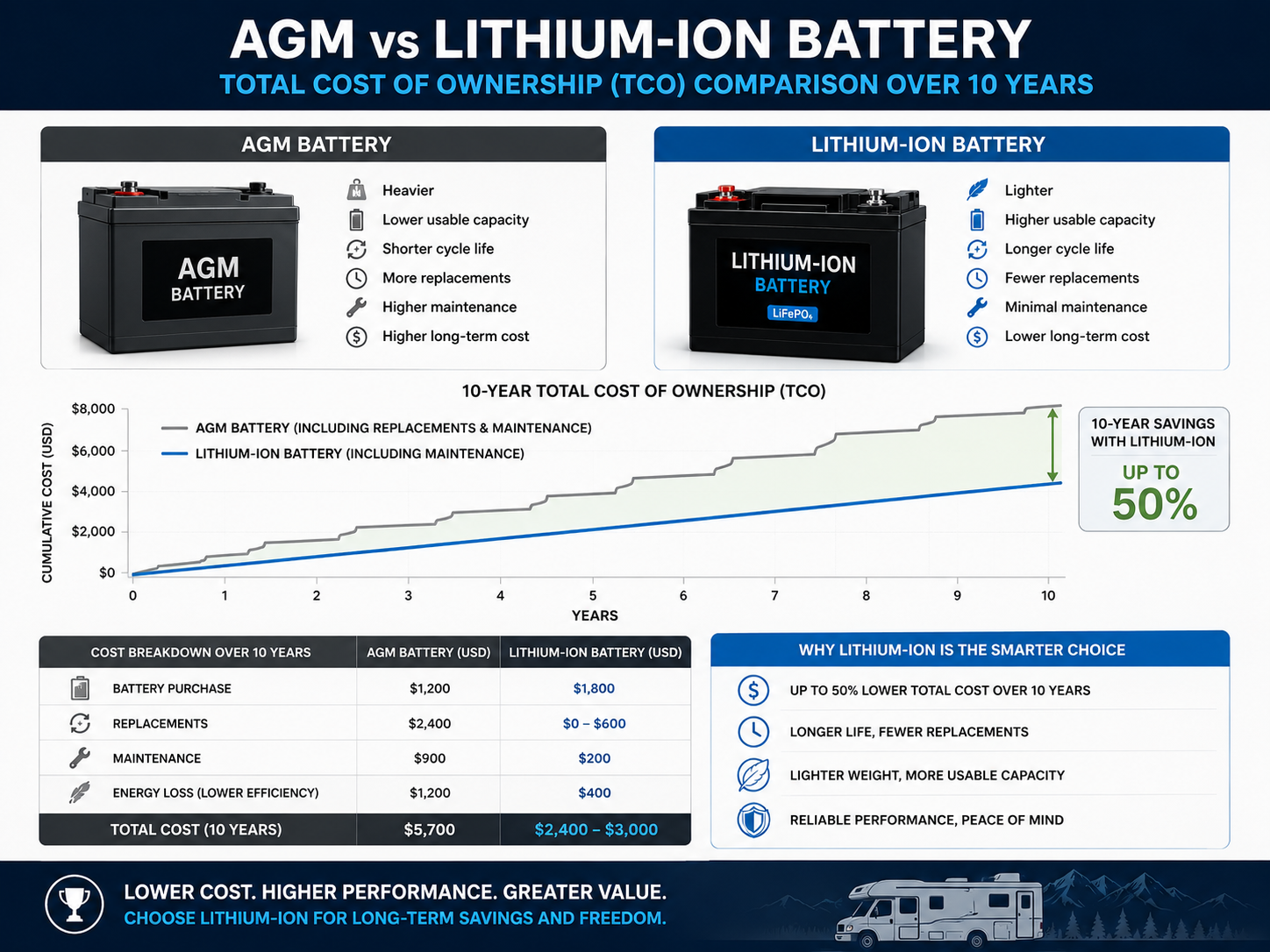
AGM batteries usually have a lower upfront cost. That makes them attractive for budget-sensitive buyers or applications with light cycling. Lithium batteries cost more initially but can provide stronger long-term value in frequent-use applications.
Cost Factor |
Lithium Battery |
AGM Battery |
Upfront price |
Higher |
Lower |
Usable capacity |
Higher |
Lower practical usable capacity |
Replacement frequency |
Lower in deep-cycle use |
Higher under frequent cycling |
Maintenance cost |
Low |
Low to moderate |
Charging efficiency |
Higher |
Lower |
Long-term value |
Strong in active-use systems |
Strong in low-budget standby use |
For commercial projects, the lowest upfront price can become more expensive if batteries need earlier replacement or provide less usable energy.
_______________________________________________________________________
Total Cost of Ownership Analysis
Total cost of ownership, or TCO, includes more than purchase price. It includes usable capacity, expected replacement frequency, labor, downtime, efficiency loss, maintenance, and warranty risk.
A practical TCO model should consider:
Battery purchase cost.
Usable depth of discharge.
Cycle life.
Charging efficiency.
Installation and replacement labor.
Downtime cost.
Warranty terms.
Recycling or disposal requirements.
Scenario |
Better TCO Candidate |
Reason |
Daily solar cycling |
Lithium |
Longer cycle life and higher usable energy |
Occasional emergency backup |
AGM or lithium |
Depends on budget and reliability target |
RV full-time use |
Lithium |
Weight, DoD, and charging advantages |
Marine house bank |
Lithium |
Lower weight and strong deep-cycle performance |
Low-cost standby |
AGM |
Lower upfront cost may be enough |
Soft CTA: Explore LiFePO4 battery products
If you are evaluating AGM replacement or new deep-cycle battery projects, explore our LiFePO4 battery products to compare voltage, capacity, BMS protection, cycle life, and OEM/ODM options.
Lithium Battery vs AGM Battery for Solar Energy Storage
For solar energy storage, lithium is usually the stronger choice when the system cycles frequently. Solar batteries often charge during the day and discharge at night, so usable capacity, cycle life, and charging efficiency matter.
AGM can work in small, budget-sensitive solar systems, especially where cycling is light. But for professional solar storage projects, lithium batteries often deliver better lifetime value.
For solar buying guidance, link to [Best Lithium Battery for Solar Storage].
Soft CTA: Explore solar storage battery solutions
For solar installers and energy storage distributors, our solar storage battery solutions are designed for deep-cycle operation, inverter compatibility, scalable capacity, and long-term energy performance.
_______________________________________________________________________
Lithium Battery vs AGM Battery for Home Backup Power
For home backup power, both AGM and lithium can provide stored energy during outages. The better option depends on backup duration, cycling frequency, installation space, and budget.
Lithium batteries are usually preferred for modern home energy storage systems because they provide higher usable capacity, lower weight, better efficiency, and longer cycle life. AGM may be acceptable for simple standby backup where the battery rarely cycles.
For home storage planning, link to [Home Energy Storage Battery Guide].
Soft CTA: Explore home energy storage systems and portable power station batteries
If you are building residential backup systems or portable power products, explore our home energy storage systems and portable power station batteries for reliable runtime, safe operation, and flexible capacity planning.
_______________________________________________________________________
Lithium Battery vs AGM Battery for RV Applications
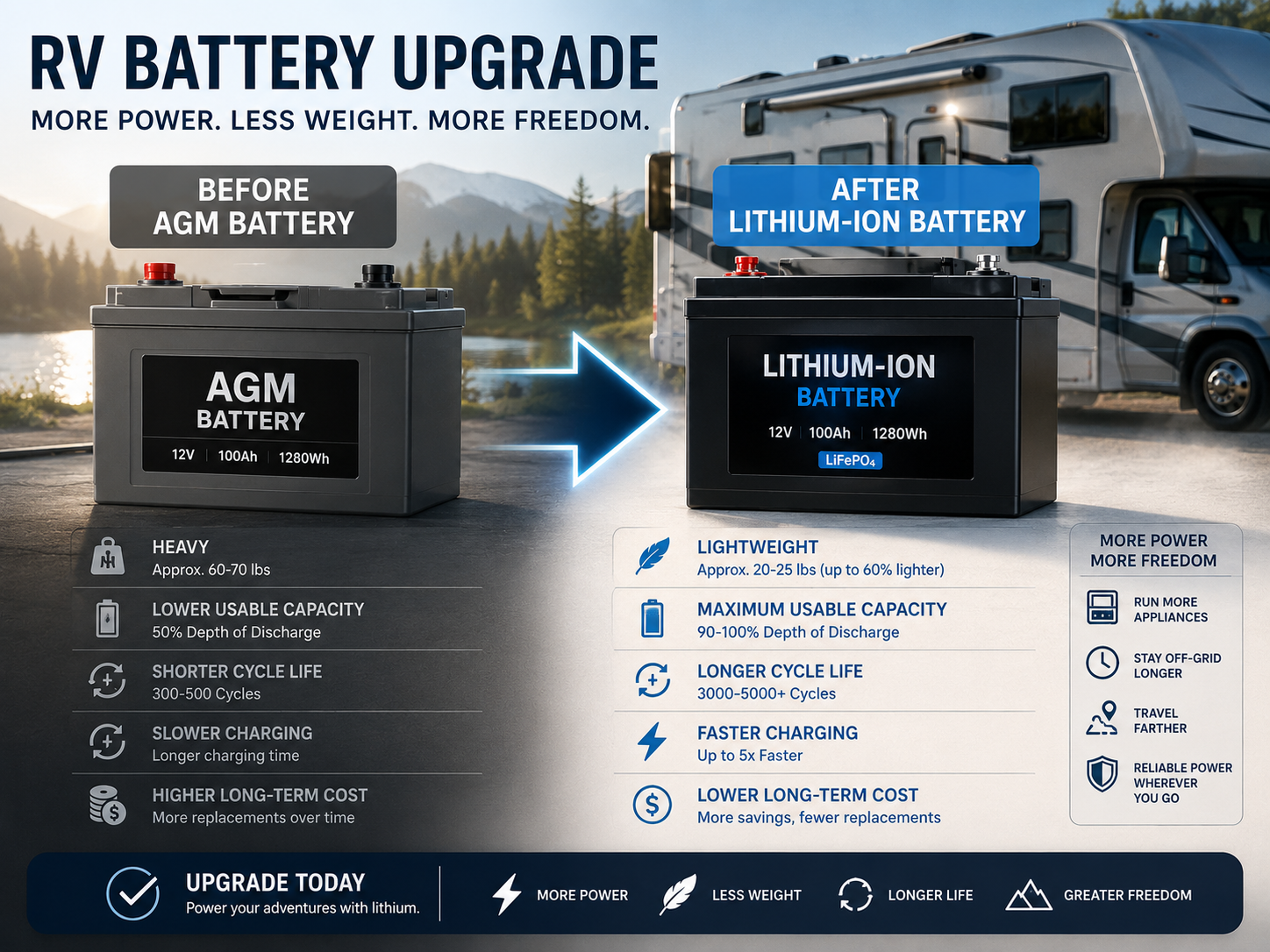
For RV applications, lithium is usually the better long-term choice. A Lithium Battery for RV provides lighter weight, deeper usable capacity, faster charging, and better performance for off-grid living.
AGM batteries may still be used when budget is limited or the RV only needs occasional power. However, full-time RV users often benefit from lithium upgrades because they rely on batteries daily for refrigerators, lighting, water pumps, fans, and electronics.
Lithium Battery vs AGM Battery for Marine Applications
Marine battery systems must handle vibration, space limits, weight concerns, and reliable power needs. AGM batteries are common in marine environments, but lithium batteries are increasingly used for house banks and auxiliary power.
Lithium may be better for boats that need long runtime, fast charging, and lower weight. AGM may still be used for budget-focused or starting applications, depending on system design.
Marine buyers should confirm charger compatibility, alternator protection, BMS limits, fusing, enclosure requirements, and installation standards before upgrading.
_______________________________________________________________________
Lithium Battery vs AGM Battery for Portable Power Stations
A Portable Power Station Battery must be compact, efficient, safe, and easy to recharge. Lithium batteries are the preferred choice for modern portable power stations because AGM batteries are too heavy and offer lower practical energy density.
LiFePO4 is especially popular in larger portable power stations because it offers long cycle life and stable performance. Other lithium-ion chemistries may be used where ultra-lightweight design is the top priority.
For product navigation, link to [Portable Power Station].
_______________________________________________________________________
Is It Worth Upgrading from AGM to Lithium?
Upgrading from AGM to lithium is often worth it when the battery system cycles frequently, space is limited, weight matters, or long-term value is more important than the lowest upfront cost.
Upgrade is usually attractive for:
Solar storage systems.
RV and marine house banks.
Portable power station products.
Home backup systems.
Industrial equipment with downtime risk.
AGM may still be reasonable when:
The application is low-cycle standby.
Budget is the main constraint.
Existing charging equipment is AGM-only.
Weight and usable capacity are not major concerns.
Before upgrading, confirm voltage, charger profile, inverter compatibility, BMS limits, cabling, fusing, and installation requirements.
_______________________________________________________________________
Frequently Asked Questions
Is a lithium battery better than an AGM battery?
A lithium battery is usually better for deep-cycle applications because it offers longer cycle life, lighter weight, faster charging, higher usable capacity, and better efficiency. AGM may still be suitable for lower-cost standby applications.
What is the main difference between AGM and lithium batteries?
The main difference is chemistry and usable performance. AGM is a sealed lead acid technology, while lithium batteries use lithium-based chemistry and usually provide more usable energy, longer cycle life, and lower weight.
Can I replace an AGM battery with a lithium battery?
In many systems, yes, but you must confirm charger compatibility, voltage range, BMS limits, wiring, fusing, and equipment requirements. Do not assume every lithium battery is a drop-in replacement.
Is LiFePO4 better than AGM?
LiFePO4 is often better than AGM for solar storage, RV, marine, home backup, and portable power applications because it supports deep cycling, faster charging, and longer service life.
Which battery is best for solar storage?
Lithium, especially LiFePO4, is often the Best Battery for Solar Storage because it provides high usable capacity, efficient charging, long cycle life, and strong deep-cycle performance.
Which battery is better for RV use?
Lithium is usually better for RV use because it is lighter, charges faster, and provides more usable capacity. AGM can still work for occasional-use RVs with limited power needs.
Are AGM batteries safer than lithium batteries?
AGM batteries and lithium batteries have different safety considerations. AGM is sealed but still lead acid. LiFePO4 lithium batteries have strong thermal stability and BMS protection, but safety depends on product quality and correct installation.
_______________________________________________________________________
Conclusion
The Lithium Battery vs AGM Battery comparison shows that AGM batteries still have a place in budget-sensitive and low-cycle standby applications. They are sealed, familiar, widely available, and usually cheaper upfront. However, lithium batteries are often the better choice for deep-cycle solar storage, RV systems, marine house banks, home backup, portable power stations, and industrial energy storage.
Lithium batteries provide lighter weight, higher usable capacity, faster charging, stronger efficiency, longer cycle life, and lower maintenance. For buyers evaluating AGM vs Lithium Battery options, the right decision should be based on total cost of ownership, not only purchase price.
If your project requires daily cycling, compact design, reliable runtime, and long-term value, lithium—especially LiFePO4—is usually the stronger battery platform.
 Hot News
2026-08-20
2026-08-16
2026-08-12
2026-08-03
2026-07-30
2026-07-26

Pittar Power is a professional manufacturer specializing inenergy storage solutions.
Room 302, Building 1, No. 10, Huangjin First Road, Nancheng District, Dongguan City, Guangdong Province, China
Copyright © Shenzhen Pittar Power Co., Ltd. All Rights Reserved Privacy Policy
 EN
EN